
Four days in New York in October
May be the best time of year to be there.
Prior to the rush of the Holidays and the heat of late summer
But, I love NYC. Like heart it. I love everything about it.
Even the addict shooting up before God and everyone in the Spring Street subway station
Tales of New York’s death are greatly exaggerated, to paraphrase Mr. Twain
And, we still take the subway. Fastest. Cheapest. Easiest way to get around town.
From meeting some pals at 81st and Madison to meeting other pals in SoHo, we took trains uptown and downtown
We took the 6th back uptown this past Sunday for a surgical strike at The Met. I join museums. The Met. The MoMA. Used to be a member of The Frick. I join because you can skip lines, don’t have to buy tickets, and part of the fee is deductible.
Having limited time this trip to the Big Apple with a tight schedule, we decided that Sunday before we hopped back on over to LaGuardia would be the best time to go see the highly touted exhibit “Siena: The Rise of Painting 1300-1350”
I know why it’s so touted
Duccio, di Pietro, Martini, the Brothers Lorenzetti.
Anyone who ever took a Renaissance art class would recognize these forms and works and transitional religious paintings and sculptures and art about to take off from the end of the Middle Ages bridging the gap to the Renaissance coming out of plague
Bridging Gothic/Gothick and Byzantine
The plague would claim the lives of each of the artists, not to mention a third of the European population
And, so, back on the 6th we hopped to 86th Street and then marched west to The Met to the members entrance on the ground floor. No waiting. Breezed through. Flashed card.
To quote Amex, “Membership has its privileges”
Up the stairs to the vaulted Great Hall.
Stopping at the information desk looking out onto 82nd Street
“Ma’am, where’s the Siena exhibit?”
“Were you here for the Harlem Renaissance Exhibit? Same gallery”
“Oh, up the stairs and to the left”
“That’s it. You’re going to love it”
So up the stairs made famous by Ocean’s 8. No Nancy Sinatra playing in the background this time
To the left and down the hall then back to the right
Into a darkened room with the exhibit details on the wall
Transitions from Byzantine to the buds later to fully flower in the Renaissance
Super low light to highlight the gold, the lapis, the enamel, the polychromatic wonder of the works
Super low light highlighting the woodwork, worm holed and exposed to dry rot down the centuries, parts missing
Super low light reflecting the dust in the folds of the Virgin’s skirts rendered from the tusk of an elephant
Super low light transforming the wound in Christ’s pierced side into a glowing red river of blood landing at His feet with a small skull beneath The Cross referencing Golgatha, the Place of the Skull
Explanations of Siena’s importance being on the road between the French and the Romans
Writings below each artwork with materials, techniques, stories
Our opening devotional piece being this one of The Virgin and Jesus. Would have been right to home at a late Roman church on The Bosporus or in Ravenna. The Byzantine icon influence can’t be missed. Nor can the frame’s damage through the years.
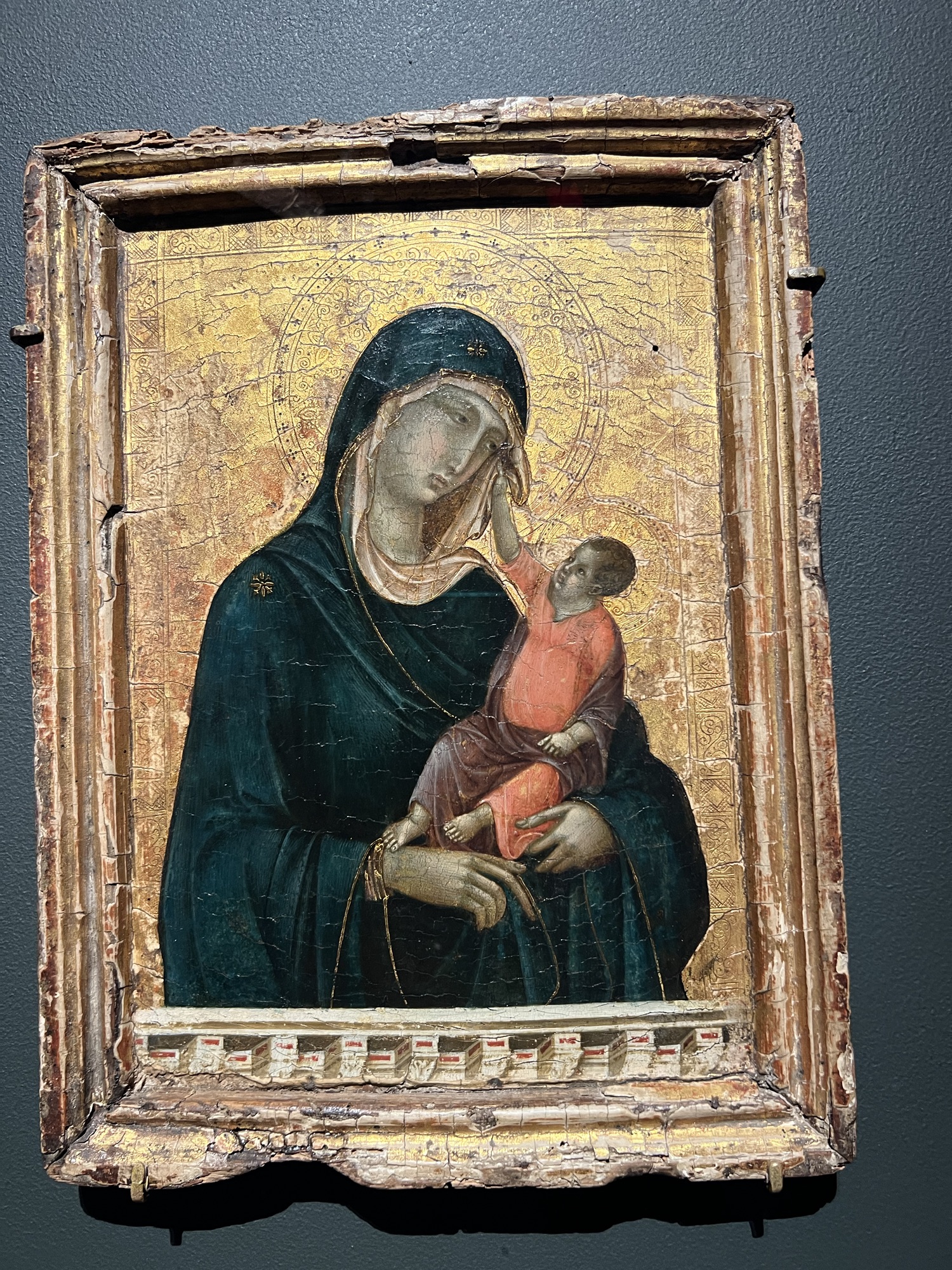
Yet, His small hand reaching up to touch his mother’s face. Wiping future tears. That touch. That little soft touch. Making way for later artwork over the next centuries
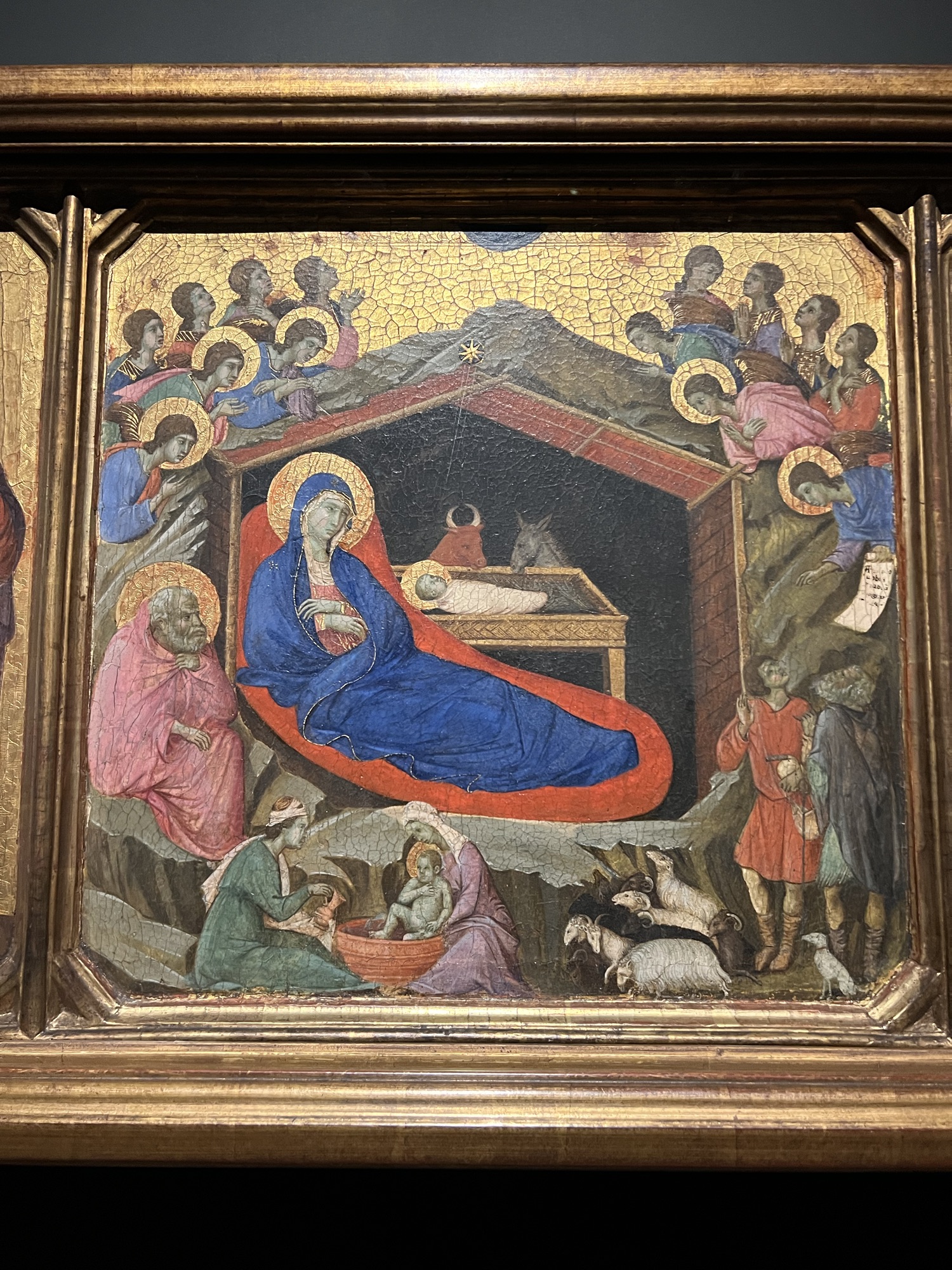
Walking up to this Nativity, Christmas carols began to play in my head
Ox and ass before him bow, and He is in the manger now
All the angels
Gloooooooooria! In excelsis Deo!
And, poor Joseph looking old beyond his years
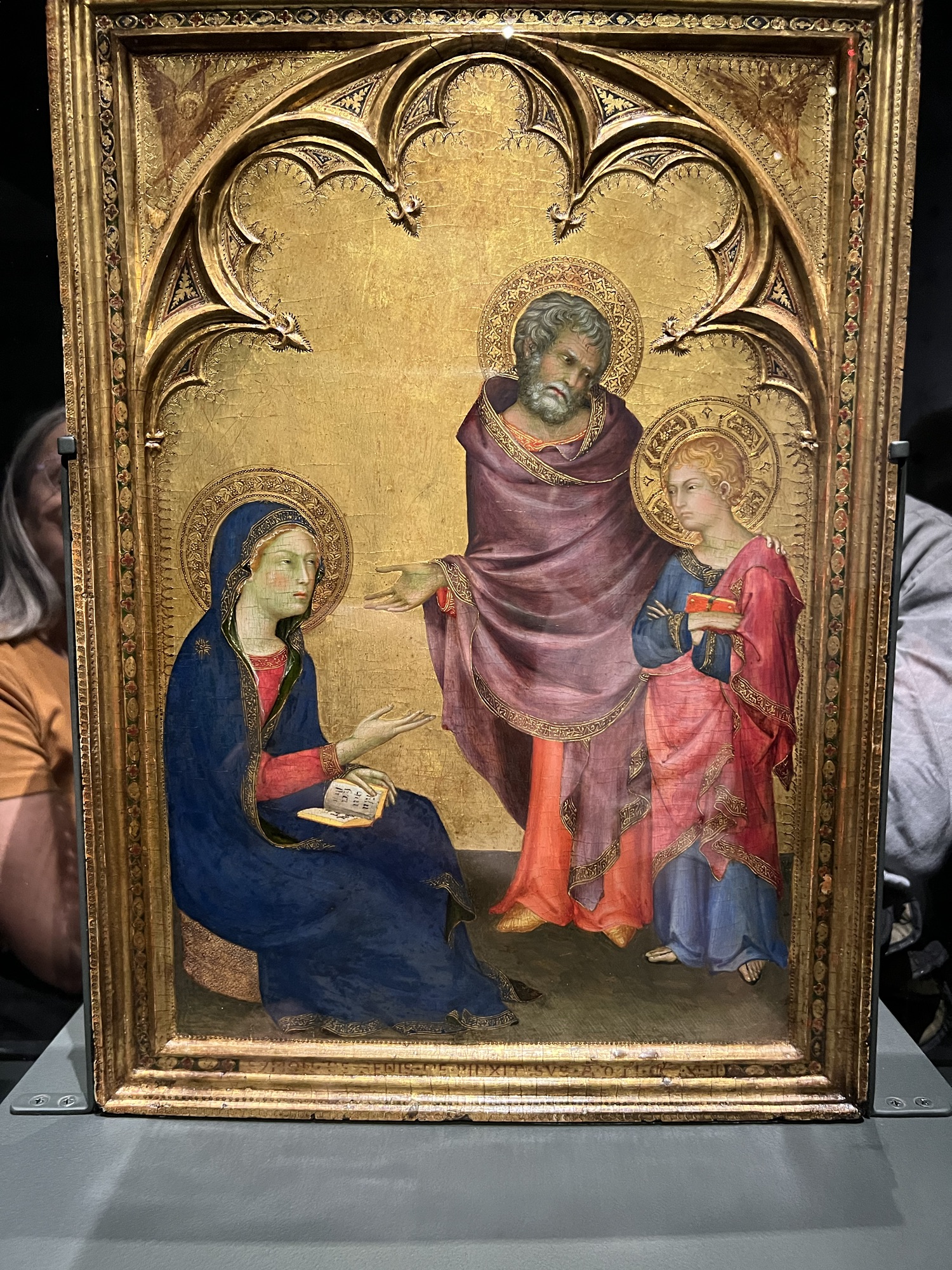
And, then, who doesn’t recognize this scene.
His earthly father pointing at his Mother. “She was worried sick. Where have you been?”
Jesus in the posture of all petulant pre-pubescents pre-teens. He was twelve.
Crossing his arms, “Why are you mad at me? I was just talking to those priests”
Mary’s hand gesture says it all
Anyone who has had a child or has been a child gets this
“Leave me alone. I’m fine!”
Fully God
Fully Man
Fully devotional
Simone Martini surely understood his assignment to capture the family dynamic.
And the altar pieces….oh the altar pieces
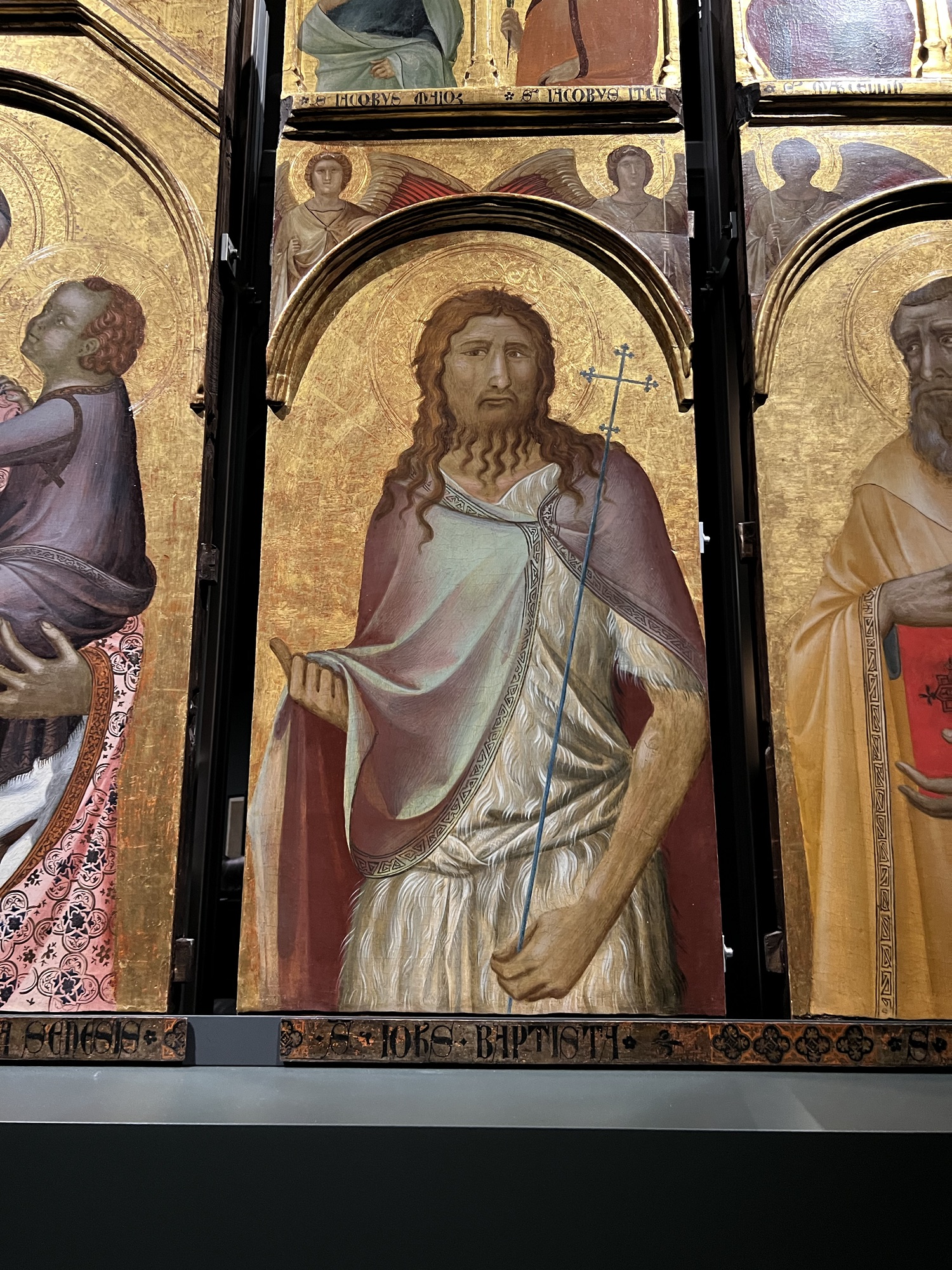
This is St. John the Baptist from a large altar piece.
His camel haired tunic showing under his royal purple robe
Prepare the way of the Lord
He is cutting his eye at the one who came after, the strap of whose sandal he was not worthy to untie. (John 1:27)
We were in town for an event for which St. John the Baptist is the patron saint, even it being closest to the Feast of St. Luke
We had been at a lengthy service at St. Thomas church the day before and Choral Evensong on Friday night
But we did go to worship on Sunday. Church in the City. At The Met.
The piece that moved us the most, and almost everyone who came through, was di Pietro’s Fragment of a Figure of Christ, formerly part of a large crucifix in a church outside of Siena. For centuries, no one knew who sculpted Christ on the crucifix. Towards the end of World War II, we and our Allies bombed the church.
The Crucifix splintered.
Discovered behind the sculpted knee cap, blown to bits, were two fragments of parchment. One identifying di Pietro as the sculptor. The other asking God for mercy on the artist’s soul.
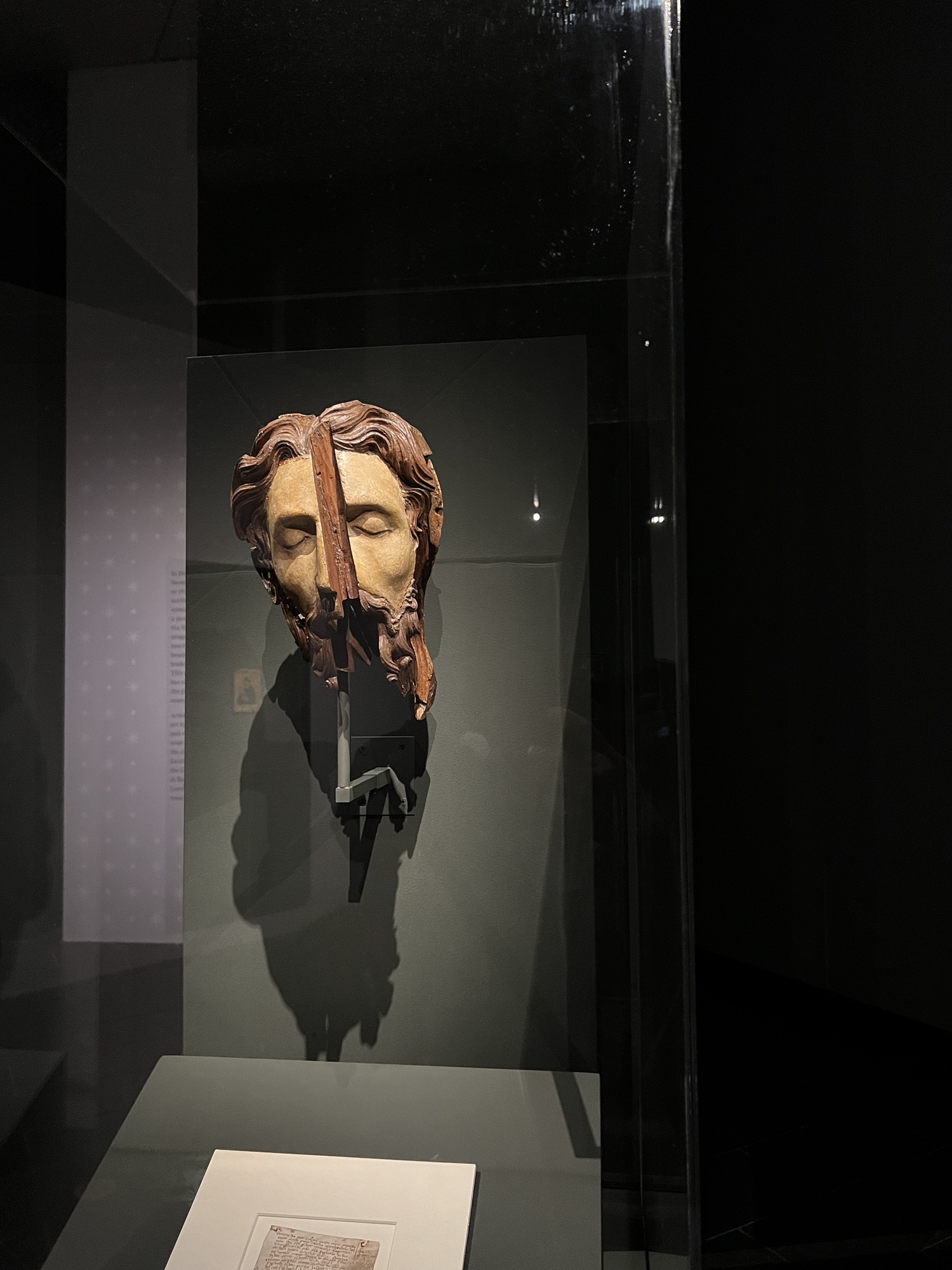
You can just make out one of the scraps there below the head.
A Man of Sorrows, indeed.
If you can get to The Met between now and January 26, 2025, you can skip the rooms of Impressionist glory on the same floor. Head straight to Gallery 999.
Knowing that none of the artists survived the Black Death and that one of them had begged for his own soul and placed that prayer in his art…..come on….who’s chopping onions in here?
All told, we were in and out of The Met in less than an hour
If you are anywhere near The Met, I encourage you to have a moment of prayer and reflection before these works.
And may we all beseech God to have mercy on our souls.
 Dad, what's for supper?
Thank you, Hamlin.So interesting and well stated.I need a NYC visit.Much overdue.SarahSent from my iPad
LikeLiked by 1 person