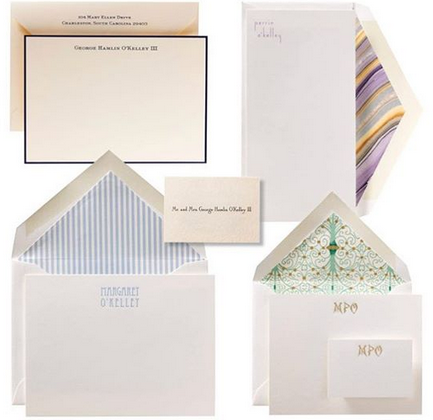
Write it Down

One horrible weekend a few years ago, one of our dearest friends and down the street neighbors called to let us know that she thought her father was in the last stages of his life.  Minutes or hours to go.  Could we help with the children?  Of course.  Duh.  Always.  She and her husband had to hightail it to Atlanta.

Unfortunately, she was correct.  Her father passed away that weekend.

Immediately, I went to the drawer of the secretary in our bedroom containing my stationery.

I can promise you one thing and one thing only.  If a friend’s family member dies, I will sit down and write that friend before I can even shed the first tear.  It’s what I was taught to do.  It’s all I know how to do to aid the afflicted.

I will pull out the stationery.

I will pull out the blue ink pen.

I will sit at my kitchen table and allow the tears to guide the words.

During that one horrible weekend, I sat down and wrote to my neighbor. I then wrote her name on the outside of the notecard envelope along with her address.  I then wrote “By hand” in the lower left hand corner of the envelope.  I then marched myself down the street to slide the note in her door.   The urgency required it.

When my neighbor and family returned to Charleston from Atlanta after the funeral, the note was waiting for her.

About a week later, she was able to tell me without tearing up just what that note meant to her.  She still has it.  She says it was the most meaningful note she received when her father died.

I wrote it on my engraved stationery.  But, I could have written to her on the back of a brown paper bag, and it would have been as effective.

I implore you to write it down.

Write it down.

Please.

Please write the sympathy letter to the sick, the condolence letter to the friend, the thank you note to the giver of the presents, the hostess and host of the party, the provider of the feast.

In 1992, when I was in college, a family friend died unexpectedly of a heart attack while watering bushes in his front yard.  I could not get home for the funeral.  I did write to his new widow and his children.  The new widow mentioned the note to my mother for years.

I am great friends with a brother and a sister in the same family.  When their papa died after a long, long, long illness I wrote both of them.  They compared their letters to make sure I was not just copying. Of course I wasn’t.

Another friend’s father died in 2009.  I barely knew the man, but his son was, and is, a great pal.  Again, I wrote the note to my friend.  He and I were talking about the importance of writing the other day.  He said that he now writes to express his sympathy the moment he hears of a death.  He claims to have taken that page right out of my playbook.

However, the play book is not mine. It’s my mother’s and father’s.

They modeled by example, as I have seen them put pen to paper for decades and decades.

Every year at Christmas, after birthdays, after any graduation, after any type of kindness, our parents made us sit down and write a thank you note.

The note written thusly was destined for the trash:

Dear So and So,

Thank you for the Rubiks cube. I like it a lot. Thanks, again –Hamlin

(Rubik’s Cube Exemplar, No. 1)

Nope.

Nope.

Tear it up.

Start over.

“That’s not very thoughtful, Son.  So and So went to the trouble to get you that Rubik’s cube when they were in New York. I think a few more lines would be appropriate.”

Nothing quite like parental guilt.

We were edited and required to write legitimate notes with legitimate vocabulary and wording and true thoughts.  Even at the age of six, such writing skills were demanded of me.  I am beyond glad that they were.

The following would have been acceptable:

Dear So and So,

Thank you for the Rubiks cube. I look forward to solving it. They are more difficult to solve than they would appear.  Thanks for pounding the pavement in New York to find one for me, too.  There was a story on the news about them the other night. Did you know that the man who invented them is an architect from Hungary?  I hope I can live up to his creation.  I hope to see you soon.  Gratefully –

Love,

Hamlin

(Rubik’s Cube Exemplar No. 2)

In the South, note writing is a big deal.

We still write the sympathy card and the thank you note.

We still write to the sick.

We still write to say congratulations.

We give our children calling cards and stationery from a young, young age and make them learn to write a well penned epistle.

I have sent my daughters back upstairs to their desks to start over when they write more of the Rubik’s Cube Exemplar No. 1 instead of Rubik’s Cube Exemplar No. 2.

Back in my 20’s, I remember my parents remarking about notes received from young couples thanking them for wedding presents.

My father and my mother would critique the quality of the writing.

“Hmmm….seems like they just filled in the blank on this one.”

“I don’t think we even gave them a silver spoon. George, did we give them a silver spoon?”

“Now, Yancey, you know I don’t remember what we gave them.”

“Well, they wrote us a three line note for what was more than a three line present whether or not it was a silver spoon.”

They also took notice of the couples who never wrote.

Bad form.

I have a good friend whose mother actually keeps wedding invitations until such time as she receives a thank you note from the happy couple.  She has a stack of invitations of brides and grooms who still have never written her a thank you note.  Believe me, she knows exactly who has not written her.  To a person.  Some pushing thirty years later.

I can’t imagine not writing notes to people at the best of times and the worst of times.

I have the tools to do it.  It kind of is all about the paper, even if I said the brown paper bag would work.

Luckily, we have access to the best of stationers.  Literally, the best: Arzberger Stationers in Charlotte, North Carolina.

Look them up, please.

Back in 1997, Mary Perrin’s dear friend and Davidson College roomie Alex Faulk Jones worked at Arzberger.  She hooked us up.

In addition to helping with our wedding invitations, Alex helped with our personal stationery, calling cards, note cards.  I only just ran out of my personal stationery some nineteen (19) years later.

When we had to re-up, we contacted our pal Elizabeth Edwards who is now one of the creative directors at Arzberger.  She hooked us up.  She hooked our children up.

See…here’s the proof:


Engraved
The family that writes together stays together


When I say that Arzberger is the best, it’s not an opinion. It’s fact at this point.

Arzberger has been engraving, embossing, printing, cutting, and pressing since 1922.

They know what they’re doing.

They have re-made our engraving plates more than once.

They even put our stationery on their website, which is way cool.

(That should earn me at least a 60% discount on all future orders. Right, Elizabeth Edwards? Right?)

I highly recommend some good stationery, whether from Arzberger or a local stationery store or even an office supply company.

I highly recommend using it.

When the time comes for a thank you, a condolence, a celebration, write it down.  Mail it.  Don’t text. Don’t email.  Write it down.

Make it thoughtful.  (See, e.g., Rubik’s Cube Exemplar No. 2)

Make it timely.

In May, we received a thank you note from a friend thanking us for coming to a party.  We had already written to that same friend thanking them for hosting us at said party.

All of those notes back and forth reminded me of the old joke about Junior Leaguers not participating in certain group activities …too many thank you notes.

Seriously, write it down.  Send the note.

Who still does that?

We Southerners do.

Who should still do that?

Everyone.

Write it down.

Down the River

Down the River
Here’s a Google Earth view of The Camp and the little hummock on which it sits


Zoo and Buddy started it all for us.  Sometime way before I was born, “Zoo” Von Harten and “Buddy” Lubkin occupied (read as squatted) on a little hummock island made of oyster shells, sand, and pluff mud.  We were told it might have been an old Indian midden, too.  We called it a hummock.  Its true geological name is a coastal hammock island.  That little hummock was and is attached to the larger Pritchard’s Island by marsh flats. Pritchard’s is a barrier island on the South Carolina coast between Trenchard’s Inlet and the Atlantic.  I don’t know who owned that parcel of land or who owned Pritchard’s Island when Mr. Von Harten and Mr. Lubkin set up their fish camp there.

By the time the 1970’s rolled around, Mr. Lubkin, Mr. Von Harten, and their friends had squatted on the hummock near the south end of Pritchard’s Island long enough to claim  potential adverse possession of the spot.  By the time I was aware of that fish camp, Philip Rhodes, an Atlanta businessman, owned Pritchard’s Island. By his grace and favor, the camp remained on the hummock on the south end of the island.

There are hundreds of fish camps all over Beaufort County.  Only accessible by boat, these camps are made of ramshackled sheds and bunk houses, generally able to be opened to catch prevailing sea breezes.   Generations  of men and children, and sometimes brave women, have gone down the river to these camps to catch fish, drink liquor, and escape life.  There are cooking stoves, old appliances, cisterns, generators, camp fires, mildewed mattresses, old sofas and chairs hauled from town – all of varying degrees of comfort.  Some camps have water closets with toilets flushed with salt water.  Some have outhouses.  Some have generators and air conditioning.  The camps are called Pair a Dice, Gale Break, Huff n Puff, Capers, Skull Creek, Spit, and a hundred other names.

Being at those camps was best summed up by a popular beer commercial where one fishing buddy said to the other, “It don’t get much better than this.”

The camp that Zoo and Buddy started was the one into which my family was invited in the 1970’s . We called it Pritchard’s, Buck’s, the Camp.  It never had a clever play on words name.

My father and I were first invited down the river to the camp when I was in either first or second grade, right after Christmas.  We said goodbye to my mother and brothers with my middle brother kicking his square toed Dingo cowboy boots at the back door screaming, “I want go with my Daddy! I want to go with my Daddy!” He was too young.

We packed cold weather gear, sleeping bags, rain coats, a cooler filed with beer and may be two Gatorades or Co-colas for me, snacks, and some contributions to the food for the weekend.  We loaded the gear into the back of the Blazer attached the boat trailer with our Boston Whaler and headed to the Station Creek landing out on St. Helena Island.  At Station Creek landing we arrived with our friends and other campers to the start of a cool rain.  As our fathers put in the boats and we headed down the river toward the camp the cool rain turned into a cold, almost freezing rain.  It rained the entire time we were there that weekend.  We never warmed up in spite of the old pot bellied stove in the main cabin being fed log after log after log after log of seasoned oak felled from right on our little hummock. We children slept in an unheated bunkhouse called the Women’s  Cabin. Women rarely slept there.

On Saturday, the men decided we would head up the way to the beach in spite of the weather.  The winter trout were running.  We attempted to fish for a little while, but, for us children, it was too cold .  My friend Paul and I took refuge in the covered bow of his father’s boat and buried ourselves under life jackets and old towels.  We were both 6 years old at the time.  Comfortably cocooned in the bow, we were jolted from our hibernation when our older friend Clark, who was then 10, came and jumped in with us.

It was such a trauma that Paul wrote about it when he returned to class in January:

“We went down the river. It was cold. Clark squished our guts out.”

Below was a picture of a boat with one large stick figure atop two other stick figures.  Paul’s teacher gave him an A for that essay.  For years his mother had that work of art on their refrigerator.

That was my introduction to life down the river.

It was not my last time there.

It was not the most memorable time there.

In our what are now called tween and early teen years, we boys relished our time down the river.

We were Lord of the Flies meets Huck Finn meets the Bad News Bears.

We were covered in pluff mud.

We fell off docks.

We learned to gig for flounder at night.

We pulled what we called wire crabs out of crabbers crab pots hoping we wouldn’t be shot.

We learned to cast shrimp nets.

We dipped skinny in the summer.

We watched loggerheads lay their eggs at night.

We woke early to see the baby turtles crawl to the sea.

We shot raccoons with our bbguns.

We shot each other with our bbguns.

We burned everything we could get our hands on.

We added lighter fluid to fires to see how large the arc of the flame would go.

We made swords out of palm fronds.

We whittled with our fathers’ Marine Corps issued K Bar knives.

We cussed like sailors.

We fought our siblings.

We fought our friends.

We played war.

We played cards.

We snuck alcohol when the adults weren’t looking.

We smoked cigars and cigarettes when the adults weren’t looking.

We floated on super high tides on leftover blocks of fiber glass, which really itches when it gets under the skin.

We searched high and low for the remnants of certain magazines that we knew the men had brought but whose existence they denied: Playboy, Penthouse, Hustler, Oui, Cheri.  Thanks Messrs. Hefner, Guccione, and Flynt.

We went to bed as late as the dads would let us.

We went to bed itchy from salt water baths in the creek.

We knew that On this Isle of Sun and Fun, We do NOT Flush for Number One as the sign over the toilet in the back of bunk house read.

We pestered the hungover cook for pancakes for breakfast knowing he would probably put onions in the pancakes to mess with us.

We trusted the men saying “We’ll catch our supper” which often meant watery gravy over grits or rice for every meal which they called venison stew as one time a deer might have passed by the cabin while the stew was cooking.

We knew that some dads never helped the children

We knew that some dads always helped the children

We warily eyed Mr. Sutker who would never share his fried chicken. “Get your goddamn grubby hands off my chicken, boys.”

On one trip down the river, the men coyly denied the presence of  lewd and licentious literature anywhere on the entirety of the island.  Of course, the men only read them for the articles.

In the cook house, one friend found a waterlogged copy of a Penthouse.  He screamed, “I got it boys!” We marched around the camp that day each carrying pages of exposed breasts and airbrushed bottoms chanting, “We’ve got the proof! We’ve got the proof!”  On that same trip, several of the dads gathered all of the remaining girly magazines and dumped them into the camp fire.  Our pal Christopher sat by the fire with his homemade palm frond sword turning page after page as the smut smoldered.

“Son, what are you doing?” asked his father.

“Getting one last look.  She’s burning fast.”

On Saturday nights down the river we begged for ghost stories around the camp fire. We had some great ones.  Bone chilling great ones.  Pat Calhoun would regale us with the horror of Ronnie Ron Du Leeay who was born in Charleston under a blood red moon who would later exact revenge upon those who spurned him due to a physical deformity.  My father would terrorize us with the Three Armed Prince who arose from the depths of the Egyptian pyramids to haunt explorers like Lord Carnarvon in a way in which King Tut never could.  My father would elicit girlish screams with tales of the half man/half beast Bolo Gator by lowering his voice and then yelling “AND THERE HE IS!” as another one of the dads roared behind us.  Younger boys were known to have wet their pants.  Paul Schwartz never put much effort into his stories.  He would always tell the one about the couple parked on the lonely country road hearing about the escapee from the mental prison with a hook for an arm arriving home with the hook latched to the passengers side of the car.

“Why did the bad guy lose his hook?” someone would always ask.

“Goddammit, it’s just a story. Go to bed you little shits.”

One Saturday night, Charlie Webb donned an old sheet and went out a ways from the camp fire out into the flat pan marsh separating the main part of the camp from another little island we called the Disco Deck.   As my father told us the tale of the Three Armed Prince for the hundredth time, Charlie rose from the marsh illuminating the bed sheet with his flashlight.  Instead of being scared, we boys took to arms and chased Mr. Webb across the marsh and into the woods. He had to run for his life.

“I knew it was my Dad” said his son Milledge. “We almost got him.”

Not everything was carefree down the river.  Buck Morris,  for whom we thought the camp was named,  was known to line us all up on the porch of the main cabin and give us a dressing down worthy of a Parris Island drill sergeant whenever one of us did something wrong like point a bbgun at someone or litter in the marsh.

“But, Humble Buck [his nickname], it wasn’t me,” some neophyte would protest. “Well, just look at ya,” Mr. Morris would say, “I don’t care who did it, because you’re all in trouble because none you stopped [whoever from doing whatever].”

One working weekend, when the men would go to clean up, repair boards, install generators, replace what was broken, a large water tank was dropped on Jimmy Vaigneur. What followed were screams and hollering and “My God, we killed Jimmy.”  One of the men had a CB radio that worked and radioed into the Sheriff that they were bringing Mr. Vaigneur in on a boat as fast as possible.  The ambulance met the boat at our friends’ dock that was right by the landing.  From that dock, Mr. Vaigneur was rushed to the hospital where they discovered a couple of broken ribs and a collapsed lung.  He was lucky to be alive.

Another trip, our pal Bill shot a friend in the back with his bbgun.

Another trip, a grown man fell off the dock at 2 a.m. fully clothed into freezing water with the air temp around 38 degrees with a stiff wind blowing. Hypothermia anyone?

Another trip, my father and Bill Robinson got stuck on an oyster bank for hours and hours until the tide came in and lifted the boat.  They didn’t care.  They had enough whiskey and beer to wait out the tide.  No one at the camp thought to go and look for them.

Another trip, my brother and two other friends got violently ill.  They were taken into town and since no one could find their mothers, they stayed with a friend’s grandfather at his store.  The men went back to the camp, of course.  The grandfather nursed them for a couple of hours until the moms could be located.  It turns out these then 12 year olds had massive hangovers after smoking cigars and shooting some Rock N Rye they had found in a boat the night before.

Another trip, one of the dads was begged and begged NOT to take his boat and his children home due to his state of inebriation late on a Saturday afternoon in June.  The father exclaimed with slurred speech, “Ahm not gonna hear it. Ahm gonna go home. I’m takin’ mah chirren and goin’ home, gottamnit.”  He then proceeded to fall from the stern to the bow of his boat as he started his rip cord outboard motor.  He then directed his then ten year old son, “Drive usss to the hill, Shon,” which meant back to the landing at Station Creek.  Any child over the age of six who had been to the camp could make that trip.  That boy made it that day.  He also helped his father get the boat out of the water and onto the trailer.  He also helped his father get them home as he sat on his dad’s lap and steered the car and boat and trailer back into town, including over two bridges.  On arrival at their house, the boy jumped out of the car and greeted his mother who was doing some yard work, “Mom, I drove the boat AND the car home.”  His mother’s reply, “Get inside, children, your father and I need to talk.  I didn’t expect y’all home until tomorrow.”  The father spent the next week on various friends’ sofas.

One Monday after a weekend down the river, I was approached at school by my friends Ginny and Sydney Meeks.  Their father, Buster, had no male children.  He came down the river with us from time to time and had a thoroughly fabulous time.

Ginny and Sydney have always been like older sisters to me.

“Oh boy, Hambone, Buster had a time down the river, but you’re gonna be in big trouble with your parents this week,” said Ginny.

“Uh-huh, big trouble, Hambone,” said Sydney tilting her chin to the left, cutting her eyes to the right. “Last night at supper, Buster told us, ‘You know I love Hambone, but boy can that kid cuss. George is gonna wear him out,’  That’s what Buster said about you, Hambone.”

I laughed in their faces.  “Ha! Y’all are just jealous. We can say whatever we want down the river. Y’all, I’m never gonna get in trouble for cussing down the river.”  We should have all had our mouths washed out with Octagon soap. What happened down the river stayed down the river.  Until now.

On all of those trips, communal living was the norm.  Moms would send various dishes.  One family would bring all the paper products.  Another would bring all the drinks for the children.  Another would bring extra coolers of ice. Another would bring hot dogs.  The tasks were always divided.  One child never had any drinks and everyone said to be careful as so-and-so would steal all your Fanta.  He always did.

One Mom usually baked a beautiful chocolate cake.  Her cakes were legend.  On one trip, the husband of that cake baker decided to hide the cake on his boat and save the confection for himself and his son.  He didn’t secure his boat very well.  Going out to the dock the next morning, we noticed thousands of little brown footprints all over the dock leading to and from the baker’s husband’s boat.  Upon arrival at the boat, it looked like the chocolate room in Willy Wonka’s factory had exploded.  There were chocolate covered raccoon foot prints all over the boat. The chocolate raccoon diarrhea stunk to High Heaven.

“Dad, we should have shared that cake,” said the baker’s son.

Reynolds Robinson loved the camp more than anyone I know.  As we would pull off the Seaside Road into the Station Creek landing he would let out a loud “YES! The boys are here!” and jump up and down. He would be the first in the boat, pluff mud already spotting the lace up mud boots we all wore from that store by the Hardees and the ice plant.   His straw colored hair would be stuck to his head by the end of the weekend.  He often tore his pants or his shorts, depending on the season.  He would always win the award for the most dirty.  No one loved the camp more than he did.  No one.  He was probably the reason we were all called Muddy Buddies by the menfolk.

One weekend, Reynolds’ older sisters, Carrie and Reyne’ came to the camp.  Usually, sisters were not allowed.  Carrie and Reyne’ ended up sleeping in the Women’s Cabin bunk house with us boys. Poor girls.  Someone’s younger sibling was particularly needy one of the nights we were there.  Carrie said he could sleep with her.  Carrie woke up the next morning with her hair covered in the remains of that siblings’ Big League chew.

We lost our beloved Muddy Buddy Reynolds in 1989. He was 13.  We miss him every day.

One year, all of us Muddy Buddies loaded up on the bed of an ancient flat bed pickup truck to appear in Beaufort’s Water Festival Parade.  My father drove.  Ray Williams was the navigator and beer provider.  We all had Muddy Buddy t-shirts with our names on the back.  Mine was misspelled. We hurled candy at folks on the side of the streets of Beaufort.

We were in line somewhere behind Senator Strom Thurmond on horseback but ahead of the Wee Princess Potentate of the Harmony Lodge Number Seven Ladies Auxiliary.  (There is so much royalty in small town parades).

My father had stenciled on the doors of the truck “Pritchards Island Muddy Buddies.”  One of our dads wore an old wool bathing suit from the 1920s with a straw boater and got razzed mercilessly.  We banged on the hood of the cab and rust fell all over my father and Ray.  They emerged from the end of the parade with a heavy dusting of ferrous oxide in their hair.  “Lucky none of that shit got in our beer,” said Ray at the end of the parade.

Continuing the tradition of Christmas visits down the river, my friends and I arranged to go to the camp during our last years of high school and throughout college.  I went to boarding school in New England for high school.  Trips down the river were about as diametrically different as an experience as one can have from my beloved Andover.

We often left early on Boxing Day and named our trips Boxing Day Down the River.  Not so original.  We usually only lasted a couple of nights wanting to be back in town for New Years Eve.  What happens down the river stays down the river, but we had endless drinking games, card games, and laughter.  We loved playing hand after hand of the interminable game called “Oh Hell.”  That game called Nomination Whist by some was taught to us by Brandon and Trevor Calhoun’s grandmother, Jane “Dolly” Elliott Calhoun Sanders, commonly known as “Dada”.  Dada patiently explained the bidding, the play, the complicated scoring to us.  After years at her card table, we knew how to play by the time we were in high school.

She would have died off to know how much drinking accompanied her beloved “Oh Hell”.  Beware being one of the players having to place a bid while holding only one card. “I bid two…” Kiss of death.  Kiss of death.  Thirteen hands total, but that one is the kiss of death, even if Dada always reminded us that it’s a poor Oh Hell scorekeeper who can’t win.

During one of our first annual Boxing Day festivities, a friend poured a shot of bourbon into an old rusted dust pan and took a shot.  From then on, the dust pan shot was how we opened and closed Boxing Day down the river. The clarion call “Dust pan shot!”  had to be obeyed by all that august assemblage.

During those Boxing Day festivities, we never even thought to look for the porno magazines of our earlier trips down the river.  Instead, we were intent on destroying brain cells and playing endless hands of “Oh Hell” while burning endless packs of Marlboro Lights.

Eventually, we learned that Mr. Rhodes, who owed the Island, had decided to donate Pritchard’s to the University of South Carolina.  The whole island.  Considering the number of lawyers who were members of the camp and the potential for a lawsuit, Mr. Rhodes stipulated to the University that those of us with the camp on the south end be allowed to remain where we had always been.  He basically granted us a life estate, of sorts.  We had been good stewards of that end of his island. We had helped with the turtles at a time when the old timers could remember going out to the islands to dig up the turtle nests to eat the eggs.  Mr. Rhodes had gained from our squatting as much as we had gained from him letting us squat.  Either the University or Mr. Rhodes  required that a limited liability company be formed.  At the time, my father was one of the members of that LLC.  For a while, at least one or more members of the camp LLC attended an annual meeting about the Island along with Mr. Rhodes’ heirs and University administrators.  My father gave our membership in the LLC to my brother who lives in Beaufort.

One of Mr. Rhodes’ granddaughters, Martha, lives in Charleston; she keeps me up to date about that magical spot where I grew up as much as I grew up in downtown Beaufort.

I pray that my brother passes on our family’s membership interest in the LLC to someone who will appreciate the camp as much as we did.

I pray that young boys are still raising hell down the river.

I pray that one of them is turning the pages of a burning girly magazine as it smokes in fire and is getting one last look.

With love and pluff mud to my Muddy Buddy brothers: Arthur and Wade O’Kelley, Hayes Williams, Brandon and Trevor Calhoun,  Paul and John Schwartz, Clark and Reynolds Robinson, Christopher Gibson, Charlie and Milledge Webb, Lee Morris, Lawrence Rowland, Bill Fuge, Richard and Chuck Pollitzer, Rob and Patrick Ragsdale.  

Tomato Pie

One picture on Instagram of tomatoes on a cookie sheet and BOOM.  Next thing I know, childhood friends, chefs, cookbook editors, Oscar winners, grown ass men, and foodies demand the receipt.  Here ‘tis.

This version may be a wee bit different from those receipts published in all those Junior Plague, Church Auxilary, Ladies Benevolent, First Methodist Presbyterian Baptist St. Gothic Revival Episcopal Anglican Roman Catholic, fundraiser cookbooks published all over the South.

It’s still a Summer Suppa Staple

Enjoy intrepid home cooks. Enjoy.


Tomato Pie

Crust

1 1/2 c AP flour
1 stick butter
1/2 tsp salt
1/2 tsp sugar
2 tbsp ice water

Pulse all but water together in food processor until coarse crumbs form. Don’t over process. Add ice water and pulse a couple more times. Dump onto work surface and bring together. Press into bottom and sides of 9 inch spring form pan. Prick all over with a fork and bake for 15 mins at 350. Let cool

Tomatoes

3 large heirloom tomatoes, sliced and salted and peppered

Let drain on paper towels for at least an hour. Better to let them drain for hours and hours covered with more paper towels. Bake tomatoes on ungreased cookie sheet at 350 for 20 mins. Let cool completely
For the Pie

Crust in spring form pan
3 scallions, chopped fine
2 tbsp fresh basil chopped chiffonade style
Aforementioned Prepared tomatoes
1 tbsp mayonnaise/vegannaise
1 c mayonnaise/vegannaise
1 c cheddar cheese grated
1/2 c additional grated cheddar

Spread the 1 tbsp of mayo on crust. Layer tomatoes, chopped scallions and basil on top of crust. No right or wrong way to do it

Mix mayo and remaining 1 c cheddar and bop all over tomatoes. Try spreading with impeccably clean fingers. Top with remaining cheddar. Bake at 350 for 30 mins. Let cool at least 10 before serving

With apologies to Sea Island Seasons, but this version is better

Xoxo Hammy

Kitchen. 11:34 p.m.

I thought I knew grief and how to mourn,

losses suffered, loved ones scorned,

Scourges of God, Redemption Devine.

Then, you died, and I’m not fine.


At your funeral, we knelt, we prayed,

sang the hymns, our hearts displayed

for all to see, the tears we wept,

and now, in private, the tears I kept

hidden from world come again

to bid me company like, you, old friend.


Nights as this one at the kitchen table

where the glass of vodka renders me unable

to speak of this enormous loss,

into the Outer Darkness tossed.


Back to the funny quipping face for the crowd

knowing I’d rather howl aloud.

You would tell me, “Shhh, hush…not now.”

So, I gulp more vodka, and my head I bow

as the tears flow down my ruddy cheek

knowing I won’t inherit with the meek.


One at a Time


For years and years, until after I graduated from  Chapel Hill, my mother, my brothers and I would get in the car on December 23rd to drive to Savannah to see my mother’s aunt, Marion Heins Peagler for a Christmas visit and lunch.

In the early 1980’s, we would go to The Pirates’ House, that landmark Savannah institution.  Herb Traub, the then owner, was one of my great-aunt’s friends.  He would let us go upstairs to the Rainforest Bar.  He would turn on the water and we would watch as rain came down before tropical plants and painted jungle scenes. A little tikki. A lot tacky.

After Mr. Traub sold The Pirates’ House, we moved our Christmas gatherings to The River House.  Located on the tourist path of River Street and owned by the Harris family, The River House was another Savannah institution. The Harris family had long been in the hospitality business in Savannah and were also friends of my great aunt and uncle.

Frankie Harris was the owner and proprietor at The River House.  He always fussed over Aunt Marion

“Shirley,” he would say to our favorite waitress, “take care of this special girl.”

“Did y’all hear Frankie? He still calls me girl. That just makes my day. Oooh what a treat. Frankie, can y’all send over some of that pahhtay, you know I’m wild about it.”

We were all wild about the pâté.

“Of course, Miz P, right on the way.”

They were special luncheons, but they really were not the star attractions of our visits.

The star of all those visits were Aunt Marion’s cheese straws.

Aunt Marion and Uncle Miner Peagler lived in the Ardsley Park section of Savannah.  Their address was 610 Washington Avenue.  Their phone number was 912-EL55789.  We boys looked forward to the trip every year because we loved our great aunt and uncle. But, mainly we loved her cheese straws.  Cheese straws and a cold Co-cola right out the icy green bottle: our ambrosia and nectar, our mead, our manna from Heaven.

Aunt Marion was our own Auntie Mame.  She was fixy. She was fun.  She laughed.  She smoked. She drank.  She had her hair done once a week.  She sold a clothing line.  She had taught elementary school for years and years. She had a wicked sense of humor.  She would giggle whenever anyone fell, tripped, hurt herself, showed up in a cast, walked with a cane.

“I shouldn’t laugh,” she would say holding her hand before her mouth.  Through peals of laughter she would say “It’s a sickness. A sickness I tell you. I shouldn’t laugh”

She often crooked her right pinky finger as she emphasized a point with her other four.

One cold Saturday we picked her up at her house earlier than she thought we would be there.  Flummoxed by the early arrival, while getting dressed she grabbed the first large spray bottle in her bathroom and sprayed her head with half the contents of the pressurized aerosol can in her bathroom.  Unknowingly, she had doused her hair in Lysol instead of Aqua Net.  Riding in the car with her that day was a lesson in astringency.

At those Christmas luncheons, we would include other friends to go with us.  Specifically, Taylor Kinsey and Hayes Williams.  They came to know and love Aunt Marion, too.  When ordering soup, she would often say, “I want that soup …you know, very”.  Hayes knew what she meant and would then say to the waiter, “Hot…she wants it very hot.” He imitated Aunt Marion for years saying, “You know, I want my soup… very…”    Waiters and waitresses all over Savannah knew what she meant.  They all knew Mr. and Mrs. P.

We were Aunt Marion and Uncle Miner’s substitute grandchildren for years until their own grandchildren came along, only one of whom lived in Savannah.  We O’Kelley boys were always near and dear to our Savannah kin.  I think of myself as having three sets of grandparents related by blood: my mother’s parents, my father’s mother (my grandfather having died years before I was born), and Aunt Marion and Uncle Miner.

Aunt Marion made the world’s best cheese straws.

Hands down.

Airy.

Crisp.

Light.

Spicy

Hot.

Salty.

Fragile.

Thin.

The receipt for the cheese straws had been handed down from her mother, my great-grandmother.  Aunt Marion always said making them hurt her arms, hurt her legs, hurt her shoulders. She said pain would shoot up her wrist as she cranked out the cheese straws using an old manual cookie press.

We always thought she was teasing as she told us such tales in the 1980’s wearing her Ultrasuede, sipping a vodka tonic, smoking a cigarette.

“Makes my arms burn like fire when I make them,” she would exclaim.  “Judas Priest…I’m going to stop next year.”

She would not stop until old age and infirmity caused her to break up housekeeping, as the old folks used to say.

Each December 23rd we would scarf down those treats consisting of a magical mix of the sharpest of cheddar, real butter, flour, salt, red pepper and one secret ingredient.  We had no regard for their maker. We had no regard for the work required to churn them out year after year after year.  We only knew we loved them and inhaled them.  Manners? What manners? Pass me the damned cheese straws.

After our luncheons, to continue our merry making over Christmas, Aunt Marion would load up tins of cheese straws for us to take home to Beaufort.  Our father would be lying in wait, “Ooh…yes! Aunt Marion’s cheese straws!” he would exclaim as we walked into the house on those Christmas Eve Eve evenings.

We would see who could sneak them when no one was looking.

Our friends would come over during Christmas break and ask, “Y’all been to Savannah yet? Yes! Aunt Marion’s cheese straws? Sweet.”

Aunt Marion was known all over Savannah for her cheese straws.  Ladies with whom she taught school counted on them as gifts, every year.  Her husband’s business associates counted on them as gifts, every year.  All of their friends and family counted on them as gifts, every year.  In addition to cheese straws, she was a wizard in the kitchen with so many other dishes, thanks to her mother and thanks to Martha Shannon, her parents’ cook, but that is a tale for another day.

The Christmas of my senior year in college, I got a wild hair. I was probably drunk when the idea came to me.  Someone in the next generation needed to go to Savannah and watch Aunt Marion make cheese straws before she got to be too old to make them.  She was more than generous with the family treasure having scrawled the ingredients and directions in her loopy school teacher handwriting and having distributed same to my mother and her sisters, to her own daughters in law, and to almost anyone who would ask for it.  I have my original copy.  Suitable for framing.

On December 21, 1993, I rang up 912-EL55789.  I asked if I could head over to watch Aunt Marion make her cheese straws.  At that point, Uncle Miner had died, and I think Aunt Marion was a bit lonely rambling around in her house. “Well of course, Son. Come right on. It will make my day. Just make it. Ooh what a treat”  She was big on that: it will make my day, oooh what a treat.  Back then, it only took forty five minutes to get from our house in Beaufort to her house in Savannah.  Over the Talmadge Bridge, straight on Oglethorpe, right on Whitaker, left on Victory, right on Abercorn, left onto Washington.  Piece of cake.

And, there in her kitchen on Washington Avenue, I watched the cheese being hand grated on the old knuckle buster, dumped into an ancient food processor, secret ingredient added, mixed just to the perfect point of combination, stuffed into a cookie press, and shot out onto well-seasoned baking sheets.  Lined up.  Cut.  Sprinkled with a little more salt.  “Whew…this KILLS my hands and burns, oh it burns, Son” she said.  Her one admonition while they were baking, “Whatever you do, don’t let them brown. They’ll be bitter as gall. Gall I say. You want to try?”  I tried. I failed.  It was a lot harder than I thought squeezing out dough using nothing but brute force.  My right shoulder muscle began to hurt, too.  My knees ached standing in the same position.  I had no idea she was being serious about cheese straws being a labor of love.

We came back two days  later for our annual Christmas luncheon, and I took only a couple of cheese straws that visit knowing the work put into them.   I attempted my first batch, ever, over that Christmas break.  They weren’t terrible, but they weren’t Aunt Marion’s, to paraphrase my father’s initial critique.  I made them a couple of times back in Chapel Hill.  I made them once or twice after graduation before I went to live in Kenya for a year.  They weren’t terrible, but they weren’t Aunt Marion’s.

Fast forward years later.  Law School.  There was a party coming up for some friends of ours who had just gotten engaged.  I decided to have a few people over for a pre-party.  I made cheese straws.  And they didn’t suck.  Really.  They didn’t suck.  In fact, they were almost as good as Aunt Marion’s.  It helped to have a food processor and to be completely fearless, not caring if they were horrible.  That seems to be the trick in the kitchen, whether with cheese straws or biscuits or pancakes or steaks or gravies or Thanksgiving turkeys. To quote Mrs. Child: “The only real stumbling block is fear of failure. In cooking you’ve got to have a what-the-hell attitude.”  In the fall of 1997, I had that what-the-hell attitude.

Another fast forward years later, as newlyweds, my wife and I gave cheese straws to friends our first married Christmas.  I served cheese straws at parties. I made them for our girls’  Christenings.  I made them for our now defunct supper club.  I made them for graduations.  I made them for church functions.  I made them for my sister-in-law to take to her high school reunion (which cheese straws she dropped walking into the hostess’s house).  I made them for birthday parties.  I took them as hostess presents.  I gave them to friends in Charlotte, Pawleys Island, Columbia, Flat Rock, Linville, all over the Carolinas.

Over time, folks in Charleston told me that I should sell my cheese straws.  They were my go to any time anyone came over for supper or for a drink.  It’s all I have to offer.  Over time, folks in Charleston would buy my cheese straws for parties and suggested I create a website, market them, get in the specialty food bidness.  The problem is that Aunt Marion’s cheese straws contain a lot of butter.  Real butter.  All of that lovely butter begins to turn rancid unless the cheese straws are frozen.  They can be frozen for months and months at a time.  Food retailers don’t want you occupying freezer space unless your names are Ben and Jerry.

Some twenty years later, I, too, have made thousands upon thousands of cheese straws.  I have taken them to the houses of the deceased.  I have taken them to brides and grooms.  I have packed them in carry-on luggage to take to friends in California.  I have mailed them to friends in Maine.

I know how to coax the best out of Aunt Marion’s cheese straws at this point. I don’t like to make them if it’s raining, unless it’s a really cold rain in the winter.  The temperature outside affects them.  The humidity level affects them.  The ovens in which they bake affect them.  The temperature of the cheese affects them.  The temperature of the butter affects them.  The coarseness of the salt affects them.  They are temperamental little things.  Making them in the summer requires a little less of one ingredient.  Making them in the winter requires a little more.

Like Aunt Marion, I, too, develop carpal tunnel syndrome around Christmas.  I know why Aunt Marion says her arms burned.  I know why she said her knees hurt. I know why she said her shoulders ached. I also have overcooked them, and they were, indeed, bitter as gall.  At fine stores everywhere, I ask for extra brown paper bags for draining them after they come out of the oven.

One Saturday before Christmas a few years ago, I made batches and batches and batches for friends who were giving them as their families’ Christmas presents.  I think I went through at least five pounds of butter.  It was all a greasy blur.  Our kitchen smelled like butter and cheese for days after.  So did I.  Opening the oven as the cheese straws baked that day, blast waves of buttery, cheesy steam hit my face, fogged my glasses, and dyed my hair with dairy turned to the third state of matter.

I can barely stand the sight of cheese straws.  I can’t stand the smell of them as they bake. I do not eat them if I serve them.  I make my family test for crispness.  I feel ill even as I type this.  Aunt Marion always passed cheese straws at her house, but, come to think of it, in the thirty one years I knew her, I never saw her eat them.

Two lovely friends used to host an annual Christmas party.  Every year that they hosted, I would drop by the night before with four bags of cheese straws.  That was usually enough for that rowdy crowd to at least have a few at the bar or as they passed the dining room table or stood by the island in the kitchen.  The hostess would immediately whisk one bag away and hide it from her husband and her children.  The host would later find them hidden in their usual spot and take a few from that cheddary cache.  Those friends say that they miss hosting their party, mainly because of my night before visit.  I still give them cheese straws for Christmas, not to get invited back to the party, but, as this is Charleston, it’s now a tradition.

At one point, I gave out the receipt all the time.  Now, I don’t.

Apparently, I must be leaving something out according to those who benefited from my knowledge as they used to tell me their final products weren’t as good as mine.

How could they be?

Those cooks didn’t go to Savannah to watch their beloved Aunt Marion in 1993.

I did.

Aunt Marion died ten years later.  She’s buried next to Uncle Miner out at Bonaventure on the Wilmington River.

I’ll never fill Aunt Marion’s cheese straw making shoes, Ferragamos with ribbons that they were, so that would be really weird. But, I like to think I’m carrying on her legacy, one cheese straw at a time.

Remember the Sabbath

Our pal Carrie Bailey Morey reigns as the Biscuit Queen of Charleston. What a wonderful story she has of taking a family receipt and turning it into an empire.

She also has a great brick and mortar biscuit shop on King Street: Callie’s Hot Little Biscuit (HLB for short).  There is almost always a line out the door spilling onto King Street.  I highly recommend the country ham and the cheddar chive.

A couple of Sundays back, I asked my bride if she wanted me to pick up some biscuits from HLB.  We had no children at home. It was only about 7:15 a.m.  HLB opens at 8:00 on Sunday mornings.  “Why not?” was the answer.

HLB isn’t too far from our house and at that time on a Sunday the streets are empty. I headed over to King Street.  When I arrived about 7:30, I noticed there were already four people standing on the sidewalk outside of HLB.  Damnit.  I’m never first.

Note: you can order ahead online and pick up but standing in line is part of the fun.

I sauntered up and gave a quick good morning and asked how long the assembled soon-to-be biscuit eaters had been waiting.

The first couple announced they had been there since 7:00 a.m as they were misinformed about the opening time. They were in town from Washington, DC.  They had been to a wedding the night before and described the festivities.  They discussed the bride and groom, their connections to Charleston through her aunt who lives here, how they loved coming to visit, and how they were not looking forward to driving back to DC via a stop through Asheville, NC, to pick up their children who had been visiting their grandparents.  Hungover loquaciousness.

The second couple had only just walked up as I was parking. They saw me arrive. They were from Raleigh, NC.  He had lived in DC near the other couples’ current residence.  She had a cousin who went to the College of Charleston.  They were just visiting and had done a bunch of touristy things around town.

I told them I lived nearby.  All four expressed their envy of the locals living here.

We were still chatting when a large, shiny, black late-model Range Rover came to its brake screeching halt in the closest parking spot.  We could hear music through its shut windows blasting around the air conditioned interior. Boompcha boompcha boompcha.  Driver in deep conversation on his phone.  Lots of hand gestures.

After hanging up the phone, the driver, a skinny twenty-something, vaulted from the car and sprinted the ten feet to the door of HLB.  Sprinted. Raced. Ran.

Wearing his LuLu Lemon shorts, his super clingy t-shirt with ironic saying, his sockless Stan Smiths, and obligatory trucker hat, he pulled, strained, and shook the door.  Obviously, HLB was not yet open for business.  He then turned, faced us five already in line, crossed his arms in front of his chest, and huffed and puffed.

He stood right in front of the door blocking all access.

We five in line all looked at each other for a second, and, then I spoke:

“Sir, what are you doing?”

“Uh…getting biscuits.  I’m only getting three. I’ll be quick.”

He didn’t budge.

“Dude, there’s a line. These nice folks from D.C. have been here since 7.  This couple from Raleigh has been here a while, too.

“Yeh, so? What are you going to do about it?”

“Well, let’s see. There are five of us and one of you. We could take you. Hell, I could take you.  Get in line, kid.”

He got in line.

Effing millennials.

New Charleston

Ædes Mores Juraque Curat

I’m from off.

I tell everyone that.

Seriously, I’m from off.

Recently, a native of the Holy City told me that I had to stop saying that.

“Beaufort isn’t off; New Jersey is off.”

In the town where I have lived longer than any other, that marsh filled peninsula where the Ashely and Cooper come together to form the Atlantic, I will always be from off.  Even if I did grow up just down the road.  Leaving church just last week, a fellow parishioner said, “Oh, …we love Beaufort. It’s what Charleston used to be like.”  And, there you have it. I’m from off, but living in the New Charleston.

The Charleston of my youth is long dead

The City

where the flower ladies and basket ladies hawked their wares on the corner of Meeting and Broad;

where open container laws were winked at;

where a couple of phone calls could get the nice boys out of the klink;

where PG and AH and Wando and First Baptist kids all knew each other;

where deb parties lasted through the night and ended up with breakfast at The Goody House;

where shrimp boats really caught shrimp;

where beach houses weren’t just for the super wealthy hedge fund managers and talk show hosts and relocated actors;

where a meal out didn’t cost as much as a meal out in New York;

where SCE&G buses still ran so that domestic workers could get to and from Miz So and So’s with ease;

where Spoleto was just proving what a cosmopolitan town this is;

where there were still a lot of folks too poor to paint and too proud to white wash;

where Krawcheck’s, Max’s, Elza’s,  Berlin’s, Bob Ellis, and Ellison’s were the places to shop;

where you weren’t getting into The Yacht Club;

where you weren’t going to that ball in late January;

where you weren’t going to the Hibernian on St. Patrick’s day;

where Harold’s Cabin at the Meeting Street Pig sold that exotic French cheese;

where the Broad Street still had a Pig;

where the Book Bag sold porn;

where Croghan’s buzzed you into that small, cramped, easily robbed space;

where Mrs. Dumas said in her smoky voice while leering over her reading glasses “Cash, check or chahge?”

where there was an empty block later to be filled with an Omni;

where Porgy & Bess were stores;

where Jack Patla’s, Cole’s, Birlant’s, Morris Sokol, and Them Furniture were the places to furnish your house;

where Upper King was a scary place of wig shops, pawn shops, and dive bars

where NO ONE lived above Calhoun Street;

where Dick Jenrette paid way too much for the Roper Mansion;

where St. Francis Hospital still had the nuns in their habits;

where the Frankie Home was still downtown;

where The Lorelei on Shem Creek was a real treat;

where the waiters at Henry’s were quick to light a cigarette or pull out a chair;

where there really was a bar called Garden and Gun;

where Snee Farm was practically to Georgetown;

where air conditioning wasn’t always available;

where dinner was still served mid-afternoon and suppa at night;

where shrimp and hominy was a weekend breakfast and not a cultural icon;

where Mrs. Hamby herself still cooked;

where Mt. Pleasant really was a quieter suburb over the old bridges;

where the Bridge Run didn’t attract 50,000 runners;

where North Charleston was just The North Area;

where sewage pumped right into the harbor;

where the only cruise ships were those little ones that would stop off next in Beaufort and then in Savannah;

where Lakeside sold prescriptions and candy

where Barton’s sold those delicious homemade chocolate bars;

where Luna Rosa sold pizza and a coke for $1.50l

where the Market flooded;

where Calhoun and East Bay flooded;

where Huger and King flooded;

where Ashley and Bennett flooded;

where Old Towne’s chickens greased up the window;

where Mr. Berlin made your mama approve the suit;

where Alice’s served great fried chicken;

where the Cavallaro Supper Club allowed brown bagging;

where Jimmy Dengate refused to serve black folks;

where Beckroges was the last of the German bakeries;

where Morrisons was high eating;

where T&T Sports and the Sportsman Shop were the only places to get those cool new shoes and nylon shell shorts;

where upstairs at Jack Krawcheck’s meant a handshake with Caleb and waiting to be fitted for that blazer and those wool pants that no one liked, but we all had to wear;

where there was only one bridge to James Island;

where there was only one bridge to Sullivan’s ;

where there was only one bridge to the Isle of Palms;

where there was only one Interstate in and out of town

where Happy Rain presided on Channel 5 in the afternoons;

where Charlie Hall told us about the weather on Channel 5;

where his wife Stacey told us about abandoned pets on Channel 5;

where Mike Hiott told us about Midday on Channel 5;

where Uncle Miles told us about alternative music on 96 Wave;

where WaveFest showcased cutting edge alternative music;

where The Music Farm was on East Bay Streetl

where Miskins didn’t i.d.;

where Miskins got raided by the vice cops;

where Cumberlands had the tub of mystery beer;

where Cumberlands had the best steak fries;

where Magnolias and Carolinas ushered in the Charleston culinary revolution;

where Perditas once held the top billing for food in town;

where barbeque meant Bessingers or Melvins;

where the Rainbows played;

where Daniel Island was a hunting preserve;

where driving to the Edisto Motel for fried shrimp was more likely a family reunion as you were bound to know someone in line;

where you could always get a job at the Navy Base;

where you could always go to work at the paper mill;

where that little lady West Ashley made those potato flour cups in which to serve Meeting Street crab;

where you always knew somebody in the airport;

where the airport was on Aviation ;

where Spruill Avenue had working girls;

where Hampton Park had working girls;

where lower Market Street had working girls;

where the dahs marched their charges in their prams around White Point Gardens;

where we out the light;

where he shrew he rock and run;

where dayclean come ;

where he niece is a boy;

where he niece is a girl;

where dats right, enny?

where The Hatman was early public art;

where the flooding is all that remains;

But, the cute young couple who just moved here from Atlanta plans on redoing the Morrisons’ old house on Legare Street which was just redone four years ago by that couple who just moved here from Chicago but who moved out to Sullivan’s because they thought downtown was becoming too crowded and Mrs. Smythe’s grandchildren are selling their house next door because the taxes are too high and none of them want the upkeep and her sister, Mrs. Simons, is selling Anson Street which she redid in the 1960s when no one lived in Ansonborough because it’s just too crowded around here and those people from DC redid the Lelands’ house next door and are insufferable neighbors.

The Elliotts still live in their house, though, JC says he’ll never be able to retire, even though he is75, because if he does they’ll have to sell because of the taxes and even now they only paint one side of their house every four years.

The Guignards have kept Little Jericho by selling off those last ten acres near the road to that developer who put in those rack em shack em little houses right before the recession.

The Millers who just moved here from California redid that house on Tradd.  They have two small children. One is at First (Scots). The other is at Charleston Day, but they’re thinking of pulling her and sending her to Ashley Hall as Charleston Day may be too small for their daughter.  They joined the Country Club and the Yacht Club pretty quickly.  He plays at Yeamans.  He plays at the Squash Club on Upper King, too.  They were Catholics in California, but, now they’re on the north aisle at St. Philip’s every Sunday.

Cute cute cute Lucy was originally from Durham, NC.  She married John, who’s from here.  Once they moved back here, Lucy threw herself into the Young Circle at the Restoration Society.  As part of the Relic Show she chaired the Friday night party.  She also threw herself into Conservancy Foundation.  In the last three years, she’s chaired the Relic Show, the Park Party and the and The Street Fair for The Museum.  Now, she has nothing to do.

We don’t pay to go to parties

Have you even seen the carpool line at Ashley Hall?  Teslas? Mercedes? Porshces? SUVs? Volvos galore?

Have you seen the student parking lot at Porter Gaud?  Teslas? Mercedes? Porsches? SUVs? Volvos galore?

I have a friend who used to go to three schools in the mornings to drop off his children as his wife went to work early, teaching at Ashley Hall.

He described his mornings in comparison to t.v. shows:

First drop off: Charleston Day School: Leave it to Beaver

Second drop off: Porter Gaud: Falcon Crest

Third drop off: Mt. Pleasant Academy: Beverly Hills 90210

“I’m so sick of everyone moving here,” says the lady originally from Atlanta

Oh, we live in Park West. We never come downtown, but we love living in Charleston

Oh, we live in Charleston National. We never come downtown, but we love living in Charleston.

Oh, we live on Daniel Island. We never come downtown, but we love living in Charleston.

Oh, we live downtown.

Who bought Sarah’s house in Rockville?  A dentist who just moved here from Cleveland, Ohio.  Really? Is there anyone left in Ohio?

They plan on putting in a pool.

Come to think of it, we should probably put in a pool

We just filled in our pool

Charleston has always attracted folks from off e.g. Nathaniel Russell, the King of the Yankees, whose daughters married into local families.  But, now these new folks keep coming and coming and coming.  They don’t marry into the local families.

These aren’t the folks who winter at Yeamans or whose great grandparents bought Old Mulberry in the 1920s.  These are the waves after waves of folks who have no notion of blending into the culture. They don’t care how it was done here for generations.  They have no desire to send their children to learn how to dance on Wednesday afternoons at Society Hall.  They don’t make Hoppin’ John and collards on New Years Day.  They don’t care about Carolina Day.  They don’t know a chainey briar from a she crab.

They don’t know that the Burke Bulldogs are the Real Deal from Stoney Field.

They don’t want to discuss race as they’re all right in their all white suburbs.  The murders at Mother Emanuel didn’t affect them.

They won’t be at those drop-ins on Christmas Eve.

They work at Boeing. They work at Volvo. They don’t work at all.  They don’t know a calling card from a credit card.

They don’t wear ties to church.

They don’t go to church.

They don’t know artichoke relish from hot dog relish.

They don’t know that local oysters are far superior to Apalachicola oysters.

They don’t care about summertime get-aways to Flat Rock.

They don’t care about summertime get-aways to the beaches because the beaches are now occupied full time.

They don’t care about grandmama’s dining room table because they’ve traded it all in for IKEA, Pottery Barn, Restoration Hardware.

Virginia’s parents moved here from New Mexico to help with that big new development out near Seabrook.  Her mother is from Texas. Her father is from Albuquerque.  They wear jeans and cowboy boots and turquoise jewelry.  They tell people that this town looks down at the heels and is kind of junky, old and sad. “Hell, we went to this party at one of Virginia’s friend’s parents’ house.  We thought it was going to be a nice house, but they had all this really old furniture and you could see the rugs were worn down from being walked on.  And they didn’t serve dinner. They just put everything out on their dining room table and just had drinks. Everyone drank a lot, but they didn’t offer us a meal. And people stayed and stayed. Back home a cocktail party means one or two drinks and you leave….here they kept telling us not to go. We were there for three hours. Our Virginia is at Porter.  Her brother is at Little School.  We love it here.”

Amanda and Banks live on some of the property her grandmother gave her out on Johns Island.  It used to take them ten minutes to get their children to school.  It now takes them thirty (30) minutes at a minimum.  If there’s a wreck on the Stono Bridge, then it’s gridlock for hours and hours.

A cable broke on the Edwards Bridge on a Monday afternoon.  No one could move getting into Mt. Pleasant, getting into Charleston, getting onto the Interstate. No one.  It took Sarah and Molly two hours round trip from downtown to Mount Pleasant and back again.  They’re in the 10th grade and were crying because they were going to miss their friend’s birthday party because of it. These bridges weren’t designed for 90,000 cars a day.

Two Whole Foods, a Trader Joes, two Costcos, myriad WalMarts, more grocery stores per capita than anywhere else, but only 1 local hardware store downtown and only 1 paint store.

Yoga studios blossoming on every corner.

Starbucks on King Street and only eight blocks away, another Starbucks on King Street.

He’s great friends with Bill Murray

He’s Danny McBride’s buddy

He’s going fishing with Daryl Hall

He’s Darius Rucker’s p.r. guy

He’s bidding on the Carolina Panthers football team

He’s the new Ambassador to Switzerland

She’s on Survivor

She’s on Southern Charm

She’s married to Bloomberg’s press secretary

She’s head of US public relations for Australia…like the whole country

She’s Sallie K’s neighbor in New York

They’re related to the DuPonts

They’re related to the Astors

They’re related to the Kennedys

They’re related to the Biddles

They’re related to Doris Duke

But wasn’t Doris Duke related to the Biddles?

Didn’t they own Rice Hope?

Didn’t they own Oaklands?

Didn’t they sell White Hall to the pro-football player?

Didn’t they sell their beach house to that talk show host…yeh…I know he’s from here…but he’s not really from here

You HAVE to meet them.  They’re great.  They just moved here from Boston  They started that company that makes those awesome slings for new mothers.  They’re all over Amazon.  He drives a Tesla SUV.  They just bought that lot on lower King where they tore down that old house.  She just wrote about it for the New York Times.  She said she loves pimento cheese and sweat tea.  She has a lot to offer Charleston, she said.  He is going to run for Congress, as a Democrat, even though he’s in a pretty Republican district.  He said he might even run for governor as his grandfather was governor of Connecticut and he’s a distant cousin of the Kerrys in Massachusetts.  He does say “La Gare”, though, and asks why everything here is so slow around here.

At least Pink and Wally still live in her great grandparents house.

At least we still get to go to Dance Night.

At least they still won’t let Barney Jones into the Yacht Club.  He’s been blackballed the last two years running, so he can’t apply for five more.  He bragged to the Wall Street Journal that he and his wife re-did Mrs. Breaux’s house and said it was “dilapidated” and suffered from “decades of deferred maintenance.”  No wonder Mrs. Breaux died a week after that article came out.

They’ve ruined Charleston

They’ve ruined James Island

They’re ruined Mt. Pleasant

They’ve ruined Johns Island

They’re ruined Sullivans

They’ve ruined Wadmalaw

They’ve ruined the Isle of Palms

They’ve ruined Kiawah

They’ve ruined Folly

They’ve ruined Seabrook

They’ve ruined the Lowcountry

Traffic is terrible in the mornings

Traffic is terrible in the evenings

Don’t go anywhere during Wildlife

Don’t go anywhere during the Bridge Run

Don’t go anywhere during Spoleto

Don’t go anywhere during Memorial Day

Don’t go anywhere during July 4th

Don’t go anywhere during Labor Day

Don’t go anywhere the Wednesday before Thanksgiving

Don’t go anywhere on Christmas Eve

There’s nowhere to shop here

You have to go to Charlotte for good shopping

You have to go to Atlanta for good shopping

You have to go to New York for good shopping

You have to go to King Street for good shopping

I love coming to Charleston to shop

Bob and Susan are in their late 20s.  He’s a freelance writer.  They plan on having children soon.  He enjoys playing on his bongos and painting. She’s a part time Pilates instructor.  They just bought a house in Lowndesborough for $850,000.00.  Her last W-2 was from her job as a barista at the Star Bucks near DuPont Circle in D.C.  Three years ago.  Lots of mailbox money in Charleston these days.  Lots of mailbox money.

Mina and Peter Masters were recovering real estate developers.  He developed gated neighborhoods from Jacksonville, FL, to Wilmington, NC.  They landed in Charleston eight years ago.  Mina Masters opened a workshop to teach the come here ladies how to fold a napkin, make a drink, polish silver, set a table, serve a meal.  She enrolled students at $50.00 a class.  She had videos on Youtube.  She had a website. She had a Twitter account. She had a syllabus.  The Masters have since divorced.  They both high tailed it out of town.

Heather and Andy Higgins moved to Charleston from Virginia.  They both had lots of cousins in Charleston.  Heather announced at her middle child’s birthday party that she and Andy would be getting a divorce due to Andy cheating on her.  With another man.  Andy told Heather that he could pray away the gay.  Heather told Andy that he couldn’t pray away the cheating.  Andy told Heather that there were a large number of married gay men in Charleston who would get together for parties at which, to quote The Smiths, even Caligula would have blushed. They, too, have since high tailed it out of town.

Tigger and Aurora Blankenship moved to Charleston, too.  He from Newport, Rhode Island; she from Fairfax, Virginia.  When they moved to town, they fist lived in an outer exurb neighborhood in Mount Pleasant.  Realizing they needed a swishier address, they moved to a closer suburban neighborhood in Mount Pleasant.  Realizing they needed an even swishier address, they moved downtown to Wraggborough.  Realizing they needed an even swishier address, they moved further downtown to lower Church Street.  When Tigger’s elderly mother in Newport realized that her son and daughter-in-law, ages 29 and 28 respectively, had moved four times in three years and spent over Six Million dollars in real estate, she removed all funding.  And, they, too, have since high tailed it out of town.

Frank Dumfries’ Great-grandparents were part of the original winter colony set that developed Yeamans Hall.  They were “in residence” most winters and enjoyed the gracious, waspy tinged Southern hospitality for which Yeamans is famous.  They were lovely people.  Frank, not so much.  Frank and his bride, the former Misty, a local gal from Goose Creek, who changed her preferred name to the gentler, quieter Missy, thought they were God’s gift to Charleston.  When asked where she went to high school, Missy/Misty often fudged her answer saying she went off to a small girls school since she had gone to the all girls Converse College for a semester.  When pressed, she revealed she went to Ft. Ahsley.  Frank grew up in The City, going to St. Bernard’s, then to Phillips Exeter and then on to Dartmouth.  He received an MBA from Wharton due to his grandmother’s influence.  Frank allegedly managed his families’ money.  Instead, Frank ran through his family’s money.  He and Missy lived on a horse farm at Wadmalaw, kept a condo at the Murray Building, and drove back and forth to Yeamans most weekends.  It was rumored that Missy had a boyfriend, the same one she had in high school in Goose Creek.  It was rumored that on trips to New York, Frank was known to pay for the services of the world’s oldest profession.  Missy and Frank tried and tried to have children.  Frank was convinced that their inability to conceive was Missy’s fault.  Missy was convinced it was Frank’s.  Finally, they went to see a doctor who confirmed for the couple what many a Student Health poster said at colleges all over the county: chlamydia is not a flower.  And, yet again, they, too, have since high tailed it out of town.

The old accented Geechie brogued ladies still meet for book club every Wednesday afternoon and complain about the traffic

The German Society still meets every other Thursday for supper.

The St. Lucia Society still passes down membership from father to son

The Gun Club has its annual December supper

The Sons of the Colony march every Carolina Day

The Bible Propagation Society still owns the building on Chisolm Street and distributes Bibles to schools and churches

The realtors brush their commission breath daily with the dollars of the new immigrants

Caldwell McPherson and his brother, Alex, opened a small website design company in 2000.  Caldwell had just dropped out of Clemson.  Alex was a senior at the College of Charleston.   Within two months of opening, Alex called his parents to let them know he, like his brother, would not be getting his degree.  Mrs. McPherson wept when Alex called just as she had when Caldwell called.  Last year, Caldwell and Alex were listed on myriad lists about web design, entrepreneurship, and sport fishing as they own one of the premier boats based out of Ripley Light.  The name of their vessel: Mama Cried. They fish in every tournament and win a lot of them.  They just bought a big beach house on Sullivans Island, too.

            Have y’all been to Leons?

Have y’all been to Little Jacks?

Have y’all been to FIG?

Have y’all been to Xia Bao?

Have y’all been to Tu?

Have y’all been to Oak?

Have y’all been to Purlieu?

Have y’all been to Stellas?

Have y’all been to Indaco?

Have y’all been to Zia?

Have y’all been to Crust?

Have y’all been to Halls?

Have y’all been to Rodney Scotts?

Have y’all been to the Glass Onion?

Have y’all been to Charleston Grill?

Have y’all been to Le Farfalle?

Have y’all been to Leyla?

Have y’all been to McCrady’s?

Have y’all been to Husk?

Have y’all been to 167 Raw?

Have y’all been to The Grocery?

Have y’all been to The Ordinary?

Have y’all been to Chez Nous?

Bless her heart she’s from Altanta

Bless her heart she’s from Charlotte

Bless his heart he’s from Boston

Bless his heart he’s from Buffalo

Annie says that we should be nice to these people as they add a lot

BoBo says we shouldn’t.

No more slave quarters: houses of enslaved Africans

No more moonlight and magnolias: plantation feudalism

No more War Between the States: Southern treason

No more Confederate reenactment: protest marches

No more conservatively dressed young ladies and men: athleisure wear, tattoos

No more seersucker and poplin: lycra and spandex

No more silver and china: biodegradable plastics

No more standing up for the lady: chewing with your mouth full

No more South Carolina history: communism wasn’t that bad

No more “my people owned slaves”: “ my people should have been embarrassed”

No more dogs on the beach: it’s my beach, too

No more alcohol on the beach: family friendly

No more boiled peanut stands: juice bars in every strip center

No more Brabhams likka: Total Wine and Bottles

No more vegetables at the Farmers Market: soaps, food trucks, and candles

No more Charleston grass: Astroturf

No more children on bikes roaming in packs: empty houses

No more local folks in the big houses: now socialites, design mavens, hedge funds

No more topsiders and boat shoes: Gucci loafers and Jimmy Choos

No more “come have a drink”: meet you in the lobby of the hotel

No more Crosbys Seafood: tilapia at the grocery store

Southeastern Wildlife

Charleston Wine + Food

Bridge Run

Boat Show

Dragon Boats

Spring Tour of Homes

Farmers Market

Spoleto Festival USA

Piccolo Spoleto

Fall Tour of Homes

Second Sundays

Holiday Markets

Christmas in Charleston


For the last thirty nine years, the Wrays have hosted a Christmas Eve drop in…ham, bread, mustard, mayonnaise; pickled shrimp; shrimp paste sandwiches; chicken salad sandwiches; cheese straws; roast beef; vegetable dip; hot cheese dip in the chafing dish; meringue kisses, divinity, sliced fruitcake, Lionel on the piazza behind the bar; appearance by Santa Claus….only local folks…until their granddaughter married that man from Rhode Island The year of the marriage, Mrs. Wray could be overheard saying, “This is the last year we’re going to do this….my name sake married a Yankee…like to have killed me, she did.”   And, sure enough, no more drop in on Christmas Eve. There are standards, after all.

Georgiana Holmes tried to guide the young couple who moved to town about how things were done.  They bought the house next to her on Ladson Street.  They were both hard charging young lawyers who decided they had to live here.  Mrs. Holmes arrived at their doorstep upon their arrival with a pan of angel biscuits (suitable for freezing) and a bottle of wine.  The lady of the house thanked her but didn’t invite her in immediately.  Mrs. Holmes quietly asked, “May I see what you’ve done with the Parkers’ old house?”  The lady invited her in.  Mrs. Holmes has since advised them on the appropriate painters, doctors, schools, baby sitters, clubs, events, and friends to have if “they want any friends in this town.”  Mrs. Holmes calls them her young people and tells the ladies in her bridge club that they’re “coming ‘long but they’re always going to be from off, bless their hearts.”

The whited sepulcher

The scribes, Pharisees, hypocrites

The money changers to be thrown from the Temple

The empty suit

The family silver

The family furniture

The family alcoholism

The family depression

The family bipolar disorder

The family ADHD

The family beach house

The family mountain house

The African American cousins no one speaks of but we all know they’re kin

See y’all in Flat Rock?

See y’all in Saluda?

See y’all in Cashiers?

See y’all in Highlands?

See y’all in Linville?

See y’all in Boone?

See y’all in Banner Elk?

See y’all in Blowing Rock?

See y’all in Rockville?

See y’all in Pawleys?

See y’all at Sullivans?

See y’all at the IoP?

See y’all at Folly?

We’re going to France this summer

We’re going to Maine this summer

We’re going to Wyoming this summer

We’re going to the Bahamas this summer

The children will be at Falling Creek

The children will be at High Rocks

The children will be at Greystone

The children will be at Illahee

The children will be at Kanuga

The children will be at Green Cove

The children will be at Mondamin

The children will be at Ton-A-Wandah

The children will be at Green River

The children will be at Sea Gull

The children will be at Seafarer

The children will be at Merrie Woode

The children will be at Merri Mac

The children will be at Rockbrook

The children will be at Pinnacle

The children will be at Rockmont

The children will be at Keystone

The children will be at Camp Carolina

The children will be at Gwynn Valley

Our children don’t go to camp

Our children go to tennis camp

Our children go to soccer camp

Our children go to basketball camp

Our children go to volleyball camp

Our children go to track camp

We don’t know them, do we?

We don’t like them, do we?

Do they go to the Donovans’ Christmas party? I don’t think I’ve ever seen them there

Do they go to the Stephensons’ oyster roast? I don’t think I’ve ever seen them there.

Do they go to the Huguenins’ barbecue? I don’t think I’ve ever seen them there.

Do they go to the McCullough’s fish fry? I don’t think I’ve ever seen them there.

What are y’all doing for Memorial Day?

What are y’all doing for the 4th of July?

What are y’all doing for Labor Day?

What are y’all doing for Fall Break?

What are y’all doing for Thanksgiving?

What are y’all doing for Christmas?

What are y’all doing from MLK weekend?

What are y’all doing from Winter Break?

What are y’all doing for Spring Break?

What are y’all doing form Memorial Day?

We’re staying here

We are, too

There’s no place I’d rather be.


We’re off

In May, a certain group of talented entrepreneurs printed my write up about a crazy weekend in Charlotte, NC.  Some of you may have read it.  IMHO, it’s may be one of the best things I have ever written.

Here’s that link: http://thesouthernc.com/capitol-charlotte-20th-anniversary-2018-mint-museum-gala/  (Can’t believe I actually uploaded that correctly)

Since that time, numerous real life friends, instafacesnap friends, and family have suggested I write more often. That’s all well and good, but Nan Talese hasn’t hit me up..at least not yet.  So, here I am.  Joining the blogosphere fifteen years after that whole wave began to crest.  I don’t even know what I’ll be publishing here, but I’m glad you took time out of your day to at least pop in for a minute to read the ramblings of a middle aged, tired, lawyer from South Carolina.  Stay tuned. More to come.