Hominy presents were this great?

For my fortieth birthday, our dear pals Anne Marie and Jimmy Hagood invited us to join them and some friends for an event during the Charleston Wine + Food Festival.

That night made up for the birthday present from my youngest.

A sickly yellowing blue-black eye.

She head butted me re-creating an unfortunate incident in the country wherein she developed two black eyes herself.

On that fateful night a few years ago, most assembled asked what happened. Instead of saying that my youngest had head butted me right before I tucked her into bed, I claimed a bar fight.

You should see the other guy.

Even with the shiner, the night I write about here ranks as one of the best nights ever.

Top ten.

A Charleston Dinner at the Hominy Grill.


img_8172-1
On Rutledge Avenue where we lay our scene. And our table.


That Charleston Wine + Food offering was the vision of the same Jimmy Hagood, half of the giver of the present, with help from Charleston’s culinary ambassadors, Matt and Ted Lee.

The organizers thought to create an authentic Charleston dinner for folks from off to celebrate typical meals of Charleston families.

It was only in the last thirty years that respectable food would be found outside of private homes in Charleston.

The problem with this offering is that locals snatched up most of the tickets.

So much for indoctrinating folks from off about traditional Charleston dinners of past and present.

Back in 2012, the Charleston Wine + Food Festival remained accessible to locals. It still had most of its original staffers. It had not morphed into the gargantuan event it is today. Most of us local types stay away now.

We used to know the director, the staff, the board members, the movers, the shakers.

We used to be invited to more events.

We don’t go any more.

Near my birthday in 2012, James Beard Award winner Robert Stehling of the Hominy Grill agreed to be the main chef of the Charleston inspired meal and to host us all at the Hominy.  Mr. Stehling cooked along with my host Jimmy Hagood, Kevin Johnson of The Grocery, and Chris Hastings of the Hot & Hot Fish Club in Birmingham.

The Hominy had just completed a renovation adding more seating.

Our house is not too far from The Hominy. Back when they served supper, we would take our young children there. We love that place.

We were honored to be included that perfect night by Anne Marie and Jimmy.

In addition to our traveling well together, we dine well together.

Their present to me in 2012 may still be one of the best birthday presents I have been blessed to receive. Church honor. Heart attack serious.

As stated, the task of the night was to serve up a meal that would have been on Charleston plates during the last 100 years.

We arrived at the Hominy that Saturday night mildly worse for wear from the night before having attended one of the Dine Around’s where guest chefs paired with local chefs. May be a touch of the wine flu flowed through our veins.

Our pals were not immediately there upon our arrival. We made small talk with some folks from Chicago and sipped the offered cocktail, a cup of St. Cecelia Punch, straight out of Charleston Receipts.

It’s the first beverage receipt in that venerable Charleston cookbook.

Lemons, brandy, pineapple, sugar, tea, rum, more brandy, champagne, and soda water. Served ice-cold.

A boozie doozie.

Julian Van Winkle would be in attendance that night along with his bride, Sissy. If you ever get the chance to sit at table with the Van Winkles, I highly recommend it.

I didn’t know it when we accepted the kind invitation, but Anne Marie and Jimmy had invited the Van Winkles and the winemakers featured that evening to sit with us.

The vintners were Tuck and Boo Beckstoffer.

Napa Nobility

She’s from the ATL originally.

Our table would be the Hagoods, Van Winkles, Beckstoffers, and….well…us…..still not worthy or sure why the Hagoods would think we were a good fit.

The Hagoods, Van Winkles, and Beckstoffers palled around at the Southern Foodways Alliance (the SFA) annual conferences at Blackberry Farm in Tennessee.

Our pals Chris and Libba Osborne used to always go to those events, too. They were in attendance that fateful evening.

Another SFA veteran and huge foodie, Rathead Riley,  came to the supper, too.

They were all great pals; we interloped.

As with all well-traveled folks who are accustomed to meeting friends of friends, the Beckstoffers and Van Winkles could not have been nicer, more fun, more gracious.

They made us feel like we had been old, old pals.

New besties.

Immediate connections.

As appetizers passed through the room, we began to assemble at our tables.

Grab a bite; have a drink; smile at someone you don’t know.

Anne Marie looked at us and said, “Y’all…over here.”

Sweet.

We had the eight-top with the others described above.

Close to the bar area.

A little bit away from the rest of the folks in the room.

At a long, long trestle table in the same room, our pals Libba and Chris Osborne and various other Charleston folks sat with food royalty, Nathalie Dupree herself.

Ms. Dupree is a BIG DEAL in the culinary world.  I think she has had as many t.v. cooking show appearances as the late Mrs. Paul Child.

If you don’t know who she is, well, then can we really be friends?

And there we were in the room with her, the most famous bourbon maker in the country, award wining wine makers, award wining barbecue cooks, and authors of successful cookbooks.

NBD

At the end of the table sat Julian Van Winkle, to his left sat Anne Marie Hagood, then me, then Boo Beckstoffer, then Jimmy Hagood at the other head, then Sissy Van Winkle, then Tuck Beckstoffer, then Mary Perrin and back to Julian Van Winkle.  Perfect mixing of the couples.

In breaking the ice at the table, I leaned over and said, “Mr. Van Winkle, what is your favorite bourbon?”

I’m sure that was the first time anyone had ever asked him that.

Take that Woodward and Bernstein.

Regular Geraldo Rivera am I.

“Please, please, call me Julian.” He replied. Then taking a sip of his own bourbon, he slyly looked at me and said, “And, to answer your question, it’s Smirnoff.”

The whole table erupted.

And, oh, the food that night.

There was crab stuffed flounder with hush puppies.

Guinea fowl and dumplings.

Shrimp and rice pilau (pronounced purr-low) .

Matt and Ted Lee stood to give those assembled the story of pilau in the Lowcountry.

They did an admirable job of reporting on a meeting with a Charleston doyenne whose mother helped edit Charleston Receipts. That doyenne may or may not be related to some of those mentioned here.

Those from off seemed appreciative of the story of Charleston’s culinary heritage.  All eight of them.

The local folks just wanted to eat.

Especially the roasted pork with spring onion gratin, roasted carrots and parsnips, Charleston gold rice with red peas, and, naturally, some braised collards. I still dream of that main course.

As the old joke goes:

Why are Charlestonians like the Chinese?

They eat rice and worship their ancestors.

Our new best friend Tuck Beckstoffer’s wines accompanied each course. As each wine pairing came to the tables, Tuck would stand and introduce the wine.

During the red meat course, which was that beautiful pork roast, we drank his luxuriously velvet Melee.

Tuck tells the story much better than I can write it, but, to paraphrase, that wine was named by his company’s chief financial officer quite by accident.

After going to said bean counter to ask about introducing that new vintage, the CFO protested Tuck’s profligate ways with the company’s money. He discussed profits and losses and years to fruition. He wagged his finger at Tuck’s vision and Tuck not taking into account the accounting.

Apparently, the CFO said that the new vintage would not just be a financial disaster, but, instead, it would be a fucking melee. Hence, the name of the wine.

I’ve heard Tuck tell that story more than once. He brings down the room.

Course followed course with Julian Van Winkle allowing those of us at his table and a few from the big table to take swigs from the bottle of Pappy 20  that he brought with him.

“Shh…don’t tell,” he conspired.

Chris Osborne made numerous visits to our table.

As another new course appeared at table, our other new best friend Sissy Van Winkle marveled at the gluttony.

“Y’all, we don’t eat like this at home. It’s usually me in sweat pants with a bowl of soup watching Jeopardy!”

We all howled.

Boo Beckstoffer extolled the virtues of being back in the South for the weekend. You can take the girl out of the 404 but you can’t take the 404 out of the girl.

[Side note: I must tell you she is one of my most ardent supporters on the social media. See? Immediate besties. Some 7 years later, the Beckstoffers just had another child.  Congratulations Boo and Tuck!  We have babysitters ready to go next time y’all are in town.]

That night, dessert was a drunken blur.

There was an upside down cake washed down with glasses of Mr. Van Winkle’s 20 year bourbon.

The shampoo effect had kicked in big time.

The shampoo effect happens on the second day or night after a big night. Take one drink and boom….drunk again….like shampoo running down your head in the shower. My sister-in-law Margaret Johnson Kunes told me about the shampoo effect years ago.

That supper at Hominy Grill years ago was all shampoo effect.

During the entire supper, there was a steady light rain outside.

It added to the ambiance, the over all effect, shampoo notwithstanding.

As we sat at table, I knew that it a was a rare night never to be repeated.

As I returned to our table from one visit to the big table, I thought, “I should take some pictures.”

Instead, I lived in the moment.

Revolutionary.

Towards the end of the meal, Robert Stehling, Kevin Johnson, and Chris Hastings came from the kitchen for their standing ovation. Some of the clappers swayed a bit as they applauded.

As we all went out to our taxis and waiting drivers, none of us wanted the experience to end.

There was another party we attended.

In the rain.

It stunk.

Robert Moss wrote about the evening for The Charleston City Paper. I have attempted to find his article to attach it here. I can’t find it.

I do remember that in his article, Mr. Moss described the magic of it all. The intimate setting. The perfect food. The laughter. The culinary potentates in the room. The stories told between courses, during wine pairings.

The perfection of it all.

Nothing stiff or stilted or boring about that night.

Bit of a melee.


dook sux

I can’t even capitalize it.

That school in Durham, North Carolina.

That school with its faux Gothic everything.

That school with the worst fan base in college basketball.

I am a proud graduate of the University of North Carolina at Chapel Hill, Bicentennial Class of 1994.

I’ve converted my Davidson graduate wife to being a huge Tar Heel fan.

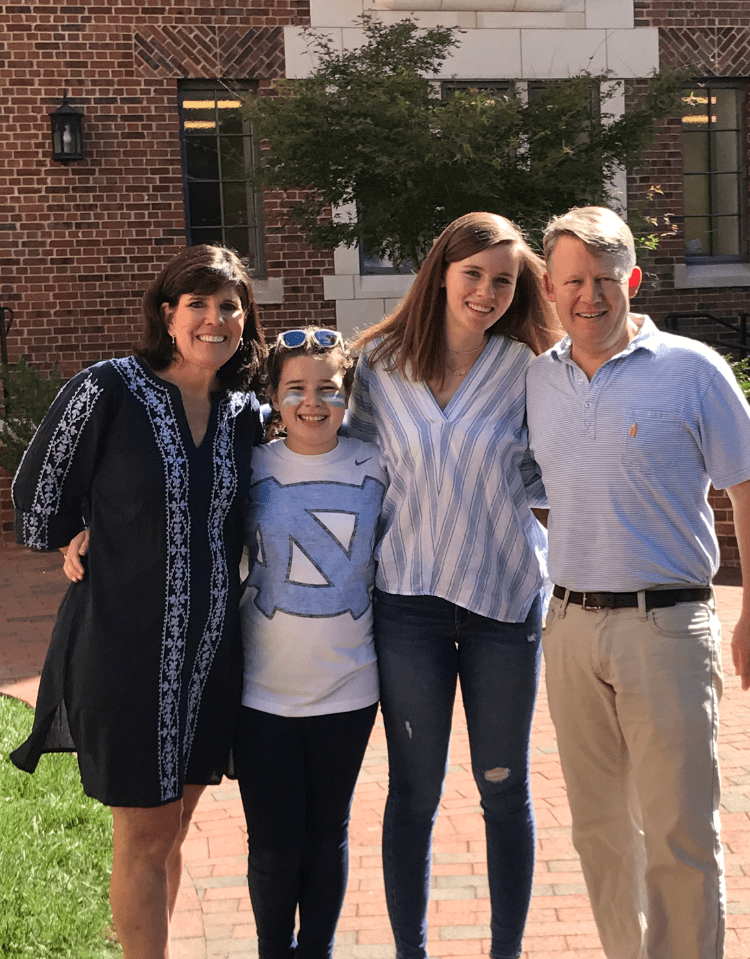
I’ve brainwashed the next generation as you can plainly see.

img_5434

We love us some Tar Heels

We hate our biggest rival.

H A T E

Loathe

Abhor

Despise

Detest

During this basketball season, I must state emphatically dook sux.

At a fellow Tar Heel’s funeral, the person speaking about the deceased told all assembled that the deceased had a particular talent for hating dook.

I miss that person every day for many reasons, that one included.

The rivalry is amazing.

Shove it Dick Vitale.

We all know you’re completely biased toward dook, Baby.

There is a book entitled To Hate Like This Is to Be Happy Forever: a Thoroughly Obsessive, Intermittently Uplifting and Occasionally Unbiased Account of the [dook]- North Carolina Basketball Rivalry by Will Blythe.  Published in 2006.  I loved it. It accurately describes the hatred that we Tar Heels feel towards that tobacco money melee down 15-501.

Unless you’re a die hard North Carolina fan, you might not like the book.

One school is a large state university of which 85% of its students are required, by law, to come from North Carolina.

Its motto is Lux Libertas. Light and Liberty.

The other is a private college named after the Duke family which started out as the Methodist and Quaker school called Trinity.  It is now highly funded by chemical companies and the Yankees that swell its ranks.

Its motto is Eruditio et Religio. Knowledge and faith.  A little bit of Methodism left.  Not much.

It’s about as Southern as a Connecticut Yankee, a Boston cream pie, a Maine lobstah roll.

I love New England. I went to school there.  But, it is weird to have a little piece of Yankeedom in North Carolina.

That’s part of the rivalry.

Ask anyone from around the South; most of them would rather pull for UNC than dook.

And, yes, everyone says, “But, So and So went to dook. You like So and So. Y’all are friends.”

I make my confession here. Some of my friends went to dook.

Yes, I love So and So.  But So and So is the exception proving the rule.

I went to Chapel Hill when Christian Laettner played over at dook. I can think of no one more badly named.  I guess Antichrist Laettner would have been too obvious.

The guy is the original douche.

He stomped on the chest of a player who was down on the court.  Stomped. Hard.  Hurt the man.

ESPN’s 30 for 30 entitled “I Hate Christian Laettner” fueled my continued hatred of that dude.

As I watched it, I had no difference of opinion as to him.  No softening. No warmth, except the undying fire of my hatred.

As Powers Boothe’s character said to C. Thomas Howell’s character in the first PG-13 movie red-commie-invasion-flick Red Dawn, “Son, all that hatred’s gonna burn you up.”

The reply, “Yeh, Colonel, but it keeps me warm.”

I’m burning up over here.

It’s not fair to judge Mr. Laettner so harshly.

He was only doing the bidding of Rat Face, the evil Mike Krysewski.

Evil. He barely punishes his players for flagrant technical violations.

Coach K indefinitely suspened Grayson Allen a few years ago for tripping an opponent.  It definitely didn’t last long.  Neither did those crocodile tear apologies.

Coach K stands in stark opposition to the late Dean Smith, who was a god.

So is Roy Williams.

Don’t come at me dook fans.

Yes, yes, yes, yes, I cried like a baby when I read about Coach K’s 37 year friendship with Steve Mitchell.  Mr. Mitchell sat behind the dook bench at every home game at Coach K’s insistence.  Mr. Mitchell died in 2017 at aged 62 from complications of a stroke. He lived with special needs his entire life, and Coach K made him an integral part of the dook family.  I’ll give that one thing to Coach K. One thing.

O.k. fine.

He’s not all bad.

But, can anyone tell me the name of an evil North Carolina player?

Does anyone remember a North Carolina player stomping someone or intentionally tripping someone?

Does anyone remember the dook students who chanted “Inhale…Exhale” when Steve Hale came back to play after a collapsed lung?

They’re just not nice.

Period.

Zion Williamson and his fellow teammates will probably make me eat all of these words this season, but, at the very least, Syracuse beat them already.  I got that going for me.

At the end of our alma mater, “Hark the Sound!”, there’s the cheer of

Rah! Rah! Carolina-lina!

Rah Rah! Carolina-lina!

Rah Rah! Carolina-lina!

Go to hell dook!

It used to be

Go to hell State!

It changed as folks over in Raleigh aren’t one millionth as obnoxious as the folks in Durham.

It changed because dook sux.

None Better Reared

My maternal grandmother had nine siblings, eight of whom lived to adulthood. The children of Lottie and Lee Muller of Redlands in Blythewood, South Carolina.

Virginia

Rachel

Lee a/k/a Buie

Emma

Ruth

Laura

Lucy

Fred

Wilhelmina a/k/a Willie

The eldest sibling, Mary Lavinia, died very young.

Emma was my grandmother. Emma Kersh Muller Heins.

These great aunts and uncles helped rear me and my brothers and all of us who were second cousins though our great-grandparents. More on them later.

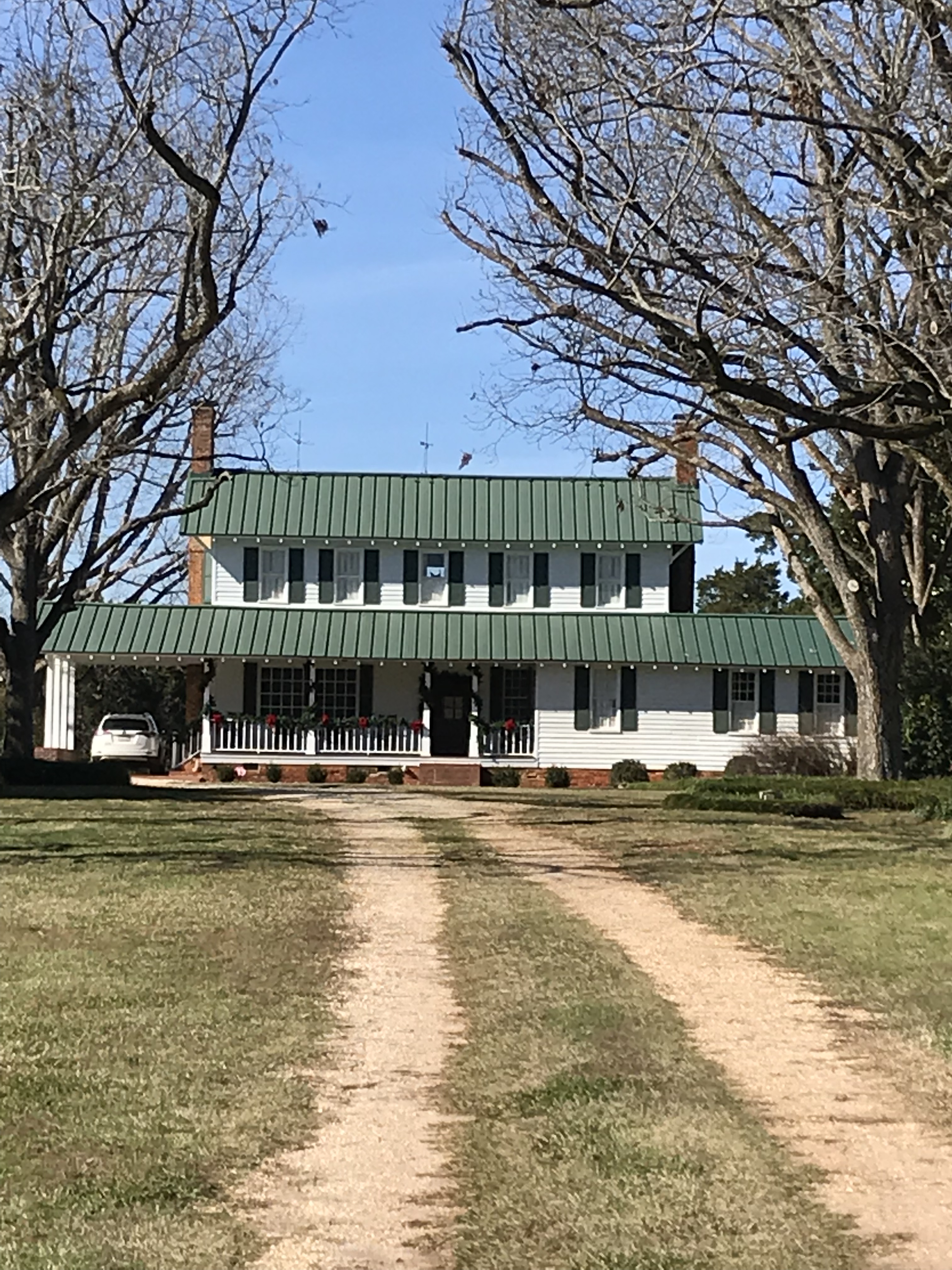
All but two of these siblings lived within thirty minutes of each other and the family place, Redlands, in Blythewood, South Carolina. Named for the color of the soil, my great-grandparents’ house was built in 1790. It would not look out of place in the Lowcountry. The house sits by what is now called Muller Road, named for my family, on a rise of a hill. My great-grandparents’ old outbuildings remain across the road.

Home. Pecan trees planted by Lottie Muller. Brick for chimneys milled on the place.

Two of my grandmother’s siblings actually lived on land formerly belonging to my great- grandparents.

My grandparents lived in Columbia, South Carolina.

I logged many hours with my beloved maternal grandparents, Emma and Arthur Heins, whom I called Mama (pronounced Maw-Maw) and Papa (pronounced Pah-pah).

I logged many hours with my great aunts and uncles, first cousins once-removed and their spouses, and a whole host of second cousins.

My brothers and I often piled into my grandmother’s bench seated Chevy Impala and rode over to see Aunt Virginia and Uncle Capers, Aunt Rachel and Uncle Kemp, Uncle Buie, Aunt Lucy and Uncle John, Aunt Laura and Uncle Bob. Sometimes we would ride over to Aunt Ruth and Uncle Bob’s house about thirty minutes away. Aunt Willie and Uncle Earl lived in Florida. We didn’t visit with them unless they came to South Carolina. We didn’t visit with Uncle Fred and Aunt Catherine much, but we did swim in their pool on Harden Street just up from Five Points.

Aunt Virginia and Uncle Capers lived on Kilbourne Road only minutes away from my grandparents on West Buchanan Drive.

Aunt Virginia and Uncle Capers capably gardened. Goldfish ponded under water lilies. I should have fallen in that pond as close as I teetered on the edge every time we were there.

“Aunt Virginia, can I go see the goldfish?”

“May I go see the goldfish?”

“May I?”

“Yes, you may, Son”

Aunt Virginia was known for her camellias and her hydrangeas.

Often, we would go round to Aunt Virginia and Uncle Capers’ house for dinner.

Dinner was the main meal of the day, eaten in the early afternoon.

When we didn’t eat in the dining room, we would eat in the sunken breakfast nook off the kitchen.

After one dinner, Aunt Virginia stepped down into the nook with cut glass bowls of dessert. Aunt Virginia baked chocolate cookies that I loved. I knew that’s what she was serving. Nope. That day, she served canned fruit cocktail. Starting to fail. Must have been.

“Aunt Virginia, what is this?” I inquired

“It’s fruit cocktail, Son. You will eat it, and you will like it.”

“No, I won’t,” I retorted.

My grandmother gasped. Uncle Capers and Papa giggled.

Aunt Virginia pinched me under the table with long bony fingers.

I ate the rancid canned fruit in front of me.

I ate it; I didn’t like it.

Uncle Capers died when I was thirteen. He served in World War I and had given my grandmother a dud grenade from Flanders’ fields. At least we were told it was a dud when we were lucky enough to play with it. Yes. We played with a dud grenade from World War I.

A few years after Uncle Capers died, the house on Kilbourne Road sold. My grandmother and her sisters used to say that “Well, Virginia’s broken up housekeeping” even though she had simply moved into the Cornell Arms apartment building uptown, the same building where one of my grandfather’s cousins lived. Back then, the Cornell Arms was for the newly wed and nearly dead. Friends of mine lived there during law school.

We would go up to Cornell Arms to visit Aunt Virginia and my grandfather’s Cousin Easie. At least there were drinks in jelly glasses for us children. We had to sit on uncomfortable sofas covered in silks, brocades, and slip covers in the summer. For what seemed like hours. No amount of iced cookies from the Winn Dixie could alleviate the boredom.

People visited more back then.

“Bring the boys. Come for a visit.”

Constant refrain from my great aunts and uncles when we were in Columbia.

“Latch strings are on the outside.”

“Come see us, hear?”

At such visits, family news and local gossip dominated. We were inculcated in who was related to whom. We knew every branch on the family tree. At least I did.

Aunt Virginia died in 1992. I didn’t go to her funeral at Elmwood Cemetery officiated by one of the assistant priests from Trinity, her church to which she could walk from Cornell Arms. That’s a regret on my part. One of the side tables from her dining room is upstairs in our house. A set of her glasses is in my kitchen cabinets. I went to Trinity when I was in law school and always gave flower memorials in honor of Aunt Virginia and Uncle Capers. Small penitence for not attending her funeral. I could have made it.

My grandparents foisted me upon my Thomas cousins on numerous occasions, which I loved. We were double, triple, quadruple kin to the Thomases on several levels. Aunt Laura Thomas was my grandmother’s sister. Her husband, Uncle Bob Thomas, was my grandfather’s second cousin and running mate from growing up in the small town of Ridgeway, South Carolina, meaning my second cousins were also my fourth cousins. We were kin through the Rosborough family more than twice.

Non-branching family trees aren’t uncommon in the South.

I spent happy hours at Aunt Laura and Uncle Bob’s house, which had been built by Uncle Ike Thomas in the late 1800’s. Uncle Ike was also one of my cousins. My cousins in Ridgeway used to say I was their coastal kin when introducing me around town. Then they’d say, “This is Arthur and Emma’s grandson.” Everyone would smile with acknowledgement. It’s a tiny tiny town.

“How’s Emma? How’s Little Ahhthah?”

My grandfather was Little Arthur until he died.

“Oh, Son, I’m your cousin So and So through the So and Sos.” Another constant refrain when there are nine siblings in a family.

On my visits with the Thomas family, we put on talent shows. A group of children in dress up clothes can sing “Rhinestone Cowboy” loudly and well for grandparents and great aunts and uncles. Old hair brushes make great microphones.

“I want to be where the lights are shining on me.”

Aunt Laura and Uncle Bob encouraged us to gather fresh eggs from the chicken coop.

Don’t walk barefooted through the chicken yard.

I did it all the time.

And according to all those old people with great old Southern accents, it’s a chicken coop sounds like book not coop sounds like Luke.

Eggs used for all manner of breakfasts, dinners, suppers. Always had to wash my feet outside after gathering from the chicken coop.

Aunt Laura and Uncle Bob also ate dinner in the mid-afternoon.

At one such dinner, my cousin Little Bob Thomas, the third of that name, leaned over to me at the dining room table and said in nothing like a stage whisper, “I don’t like eating at Grandmama’s house.”

“Why not?” I asked of him.

“Too many casseroles.”

We had a lot of casseroles.

We had a lot of aspics.

We had a lot of congealed salads with the adjectives “elegant” or “supreme” or “divine” in front of them. I may be the only person under 85 to love any recipe that uses the following directions:

Soften Knox gelatin in hot water

Wait until the Jello begins to set in the icebox, about twenty minutes

Add the fruit

Garnish with a spoonful of mayonnaise

Rinse the cherry pie filling

Chop the walnuts fine

Mix the cream cheese and nuts

Let soak overnight to sweeten

Let the 7UP go flat before adding to the lemon Jello

I don’t remember eating dinners with Aunt Rachel and Uncle Kemp at their house on South Edisto in Columbia. But, Aunt Rachel knew how to entertain us without setting a full table. Aunt Rachel baked gingerbread cookies with us. We begged for it on visits to her house. Such a prolific cookie baker, her own grandchildren called her Cookie.

Aunt Rachel would show us the painting of our ancestor great-something-great-grandfather Frederick Muller, our immigrant from Germany. Painted by his father, our great-something-great-great grandfather in Germany. The portrait intrigued due to the place in the hollow of Herr Muller’s neck. Sliced. Repaired. A hole that had been fixed, poorly.

“Boys, that’s Frederick Muller your [however many]-great grandfather. See that place under his throat. That’s where Sherman’s troops sliced his throat as they passed through.”

That generation cussed Sherman regularly.

Aunt Rachel called my grandmother every day at the same time. The phone would ring at my grandparents’ house, and I would answer knowing that it would be Aunt Rachel.

Precocious little jerk.

“Hey, Aunt Rachel.”

It would always be Aunt Rachel.

With a giggle, she would say, “Put Emma on the phone, Son.”

All males cousins were and are called Son in my family. On all sides.

Both Aunt Rachel and my grandmother would close their eyes when they talked on the phone. I do it now without even knowing it.

Like Aunt Virginia and Uncle Capers, Aunt Rachel and Uncle Kemp were amazing gardeners. Aunt Rachel put egg shells in water to add calcium to her tomato plants. She had foxgloves all over the garden in early summer. Purple and pink phlox spread amid the beds.

Uncle Kemp was a Lutheran pastor known for his work in pioneering mental health care as part of ministry.

Groundbreaker.

Uncle Kemp brought back a Nativity set for me from the Holy Land made of olive wood from the Mount of Olives. He told me I was his only great-niece or great-nephew who would appreciate that. I put it out every Christmas.

We would go see Uncle Buie, pronounced Buh-ee, whose real name was Lee, but it’s the South and everyone has an Uncle Buie, Uncle Bubba, Uncle Boy, Uncle Brother. Uncle Buie kept cattle and would call them for us. He loved to make dump cakes and would show up with a dump cake in tow whenever there was a family function. He kept a running tally of Christmas cards received every year.

We used to have giant Easter egg hunts at Uncle Buie’s with second cousins running all over filling Easter baskets hoping to find the golden egg.


img_8080
Aunt Rachel, Mama, Aunt Willie feeding one of us second cousins, and Uncle Buie. Easter. 1978

Uncle Buie also called my grandparents house every day.

He lived almost next door to Aunt Lucy and Uncle John Smith. Aunt Lucy used to get into heated arguments with Uncle Buie about raking leaves and the best way to garden.

“Buie, don’t tell me what to do.”

“Lucy, you should use those leaves as mulch.”

“Buie, don’t tell me what to do.”

Aunt Lucy made the best potato salad in the world.

In.

The.

World.

Whenever anyone asked her about her technique, she would say, “All in the world I do is peel and boil red bliss potatoes and add a little celery, salt, pepper and mayonnaise. It’s all in the world I do.”

In.

The.

World.

Mama would put is in the Impala and drive us over to Bishopville to visit with Aunt Ruth and Uncle Bob. Aunt Ruth and Mama were super close; they were closest in age. I have a sepia tinted picture of the two of them as little girls in white linen finery. In the event of fire, I will run out the house with that picture in silver frame.

Aunt Ruth remained the sweetest of those great aunts. Never a word of judgment against anyone or anything. Still not sure we were related.

The whole time I knew her, she was just as sweet as the fresh summer blackberries she covered in sugar until syrup formed.

“These need just a touch more shuga, don’t y’all think?” she would say.

Uncle Bob had served in World War II, jumping out with the 82nd Airborne in France on DDay. Due to a parachute malfunction, he broke his back when a French farmer’s hay bail broke his fall. He didn’t know he had broken his back, but he had. Tougher than shoe leather.

As Uncle Bob was jumping into the thick of it, his father-in-law bemoaned the fate of his distant German kinfolk.

He would say to Aunt Ruth, “Oh, my poor, poor people.”

What about his poor, poor son-in-law?

Aunt Ruth said she would just go cry when her father made such statements.

As a young lawyer, I would pop in on Aunt Ruth if I had court in Lee County. I showed up with bad fried chicken from the Piggly Wiggly or the Hardees or an ugly plant or flowers.

Never show up empty handed.

“Oh, Son, you didn’t need to bring a thing but yourself,” she would exclaim. I secretly new she appreciated even the badly fried yardbird.

After those visits, Aunt Ruth would put out the APB to everyone in the family that I had stopped by. I was her favorite of the great-nieces and -nephews. I just was. Hands down.

As I would leave her door, she would say, “Come back any time, Son.” She would then repeat her family’s hospitality statement, “Latch strings are on the outside.”

I sat on her sofa and all of their sofas for hours and hours.

I would listen.

They talked about the hired help, including “Aunt” Rachel for whom my Aunt Rachel was named. Truly. Yes, just like Aunt Jemima, there had been an Aunt Rachel. Only 100 years ago, folks.

They talked about all of the the sharecroppers who lived on the place, the commissary operated by my great-grandparents, how my great-grandparents were entrusted with the food stores and canned goods of their neighbors during the Depression because they had a cold cellar and the neighbors all around them knew that Lottie and Lee Muller would not steal, about the foster children taken in by my great-grandparents, about cousins who were even more distant kinfolk.

They reported on Aunt So and So who was in her what they called a Second Childhood. We now call that Alzheimer’s.

They discussed how my great-grandmother, a college graduate herself, insisted that all of her children would go to college. No debate, even though she had been trained in debate.

My great grandfather said they could all go work in a mill.

Over her dead body said my great-grandmother.

I need to write all of this down somewhere.

After we would return from dinners and visits and family gossip and discussions about friends, we would retreat to my grandparents’ house. Plopped down in front of reruns on WTBS out of Atlanta. Green Acres were the place for me.

My grandmother would allow us bowls of Pet vanilla ice milk and Pepperidge Farm coconut cake as only grandmothers would allow.

Parents would say such would spoil our suppers.

After watching the news on WIS in the evening, my grandmother would rise and say “Lemme go see ’bout suppa”, pushing up from the same Hepplewhite sofa that now sits in our living room.

Our decorating style could be called Early Dead People.

“Brother Kemp says we are allowed three tries,” Mama would say as she aged and rising from the sofa became more labored.

Into the kitchen she would go. A quick cook, we would be eating in no time. At the dining room table. Always. Usually a smaller meal than dinner.

My brother Arthur was a food critic, too, like our cousin Little Bob.

At one supper around the dining room table, he said, “Mama at your house we always have such little meals.”

Papa placed his napkin over his mouth and laughed out loud.

“Hush, Arthur,” she said, calling both their names.

On one trip to Columbia, we went with my grandmother to shop for something at the now defunct J.B. White’s department store. Height of elegance.

They had a display of books for some reason. I stopped to check them out. I was left behind and one of the clerks took me to my grandmother.

“He loves to read. He’s a bit bookish,” my grandmother told that shop clerk. I now realize that was a bit of an insult. But, she was right. It runs in the family.

Aunt Rachel wrote a memoir entitled, “I Remember” about growing up with all of those siblings and stories of life on the place. She dedicated that memoir “For the Cousins.”

I will be stealing it from my parents and making copies the next time I find it.

At the end of her memoir, Aunt Rachel recalled a conversation with Aunt Virginia when they were both young teachers living together before they were married and started housekeeping.

Aunt Virginia said, “Rachel, we have met many who grew up with more money, more comfort, more education, but we have met none better reared.”

Having spent so much time with that generation, I declare the same.

P.S.  After publishing this piece, my cousin Eleanor Thomas Parish sent me a copy of “I Remember”.  It’s actually “For the Grandchildren, Christmas, 1979.”  My remembering was a little off.

Here’s the exact quote from Aunt Rachel:

Virginia asked me when were were teaching in Parker District, Greenville, “Rachel, have you noticed that we meet people who are better looking, better dressed, wealthier, have finer homes, and are better educated, but we never meet anyone better reared?” 

I was close.